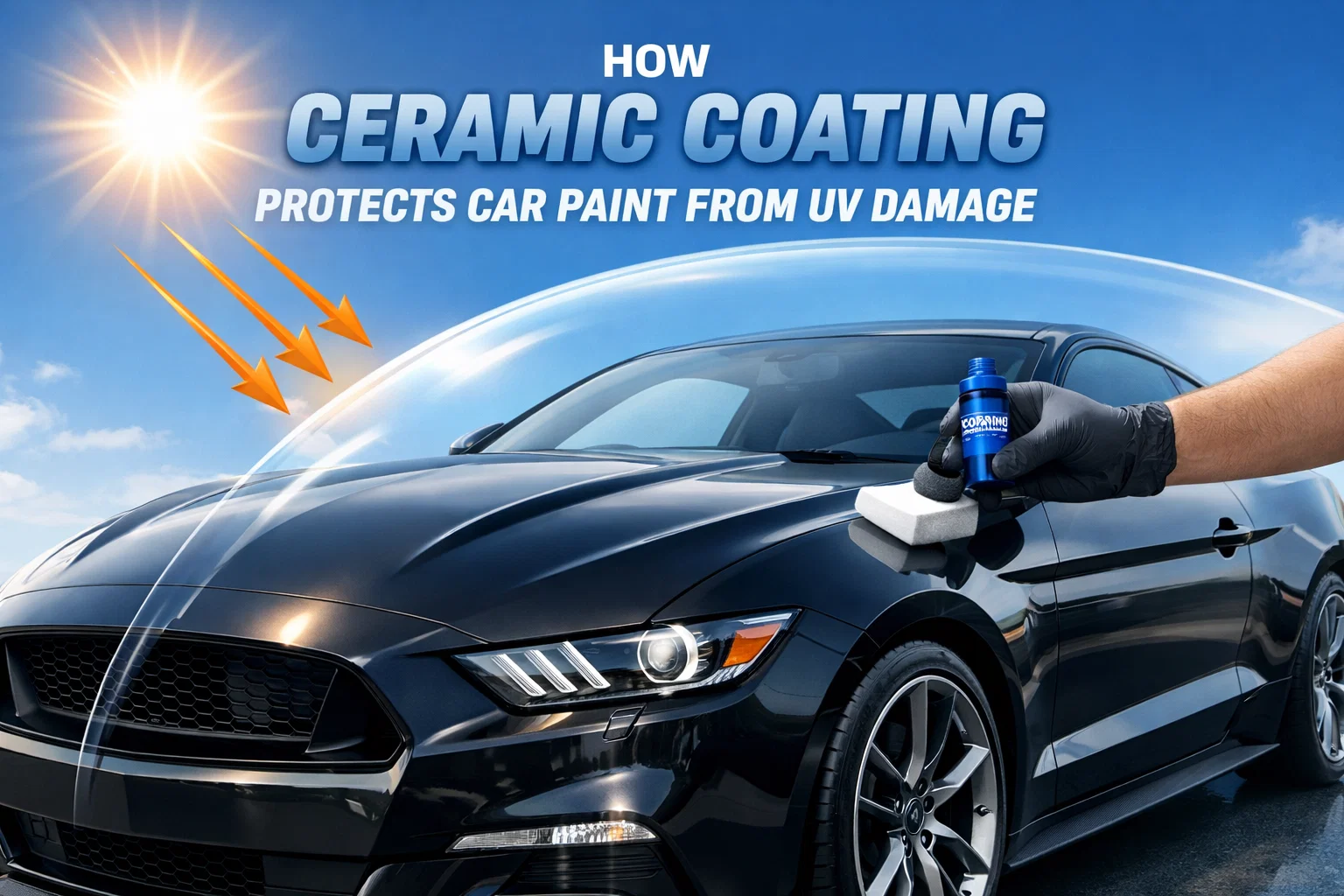
Sunlight is one of the most damaging elements your vehicle faces every day. While it may seem harmless, prolonged exposure to ultraviolet (UV) rays can cause severe damage to your car’s paint over time. Fading, oxidation, discoloration, and loss of gloss are all common signs of UV-related paint degradation. This is where ceramic coating plays a crucial role. Ceramic coating has become one of the most effective solutions for protecting car paint from UV damage while maintaining long-lasting shine and durability.
This guide explains how ceramic coating works, why UV rays damage car paint, and how ceramic coating provides a powerful layer of protection that keeps your vehicle looking new for years.
Understanding UV Damage to Car Paint
Car paint consists of multiple layers, including primer, base coat, and clear coat. The clear coat is the topmost layer that gives your car its glossy appearance and protects the color underneath. UV rays penetrate the clear coat and break down the chemical bonds in the paint.
Over time, this leads to oxidation, which causes the paint to appear dull, chalky, or faded. Dark-colored vehicles are particularly vulnerable because they absorb more heat and UV radiation. In hot climates, UV damage can accelerate significantly, reducing both aesthetic appeal and resale value.
What Is Ceramic Coating?
Ceramic coating is a liquid polymer applied to the exterior surfaces of a vehicle. Once applied, it chemically bonds with the factory paint, creating a semi-permanent protective layer. Unlike waxes or sealants that sit on top of the paint and wear off quickly, ceramic coating forms a durable shield that resists environmental damage.
This protective layer enhances gloss, repels water, and blocks harmful UV rays, making it one of the most effective paint protection solutions available today.
How Ceramic Coating Blocks UV Rays
UV-Resistant Chemical Composition
Ceramic coatings are formulated with silica dioxide or silicon carbide compounds that offer strong UV resistance. These compounds absorb and reflect UV radiation, preventing it from reaching the paint’s clear coat.
By acting as a UV barrier, ceramic coating reduces oxidation and slows down the aging process of your vehicle’s paint.
Preventing Oxidation and Fading
Oxidation occurs when UV rays interact with oxygen and moisture on the paint surface. Ceramic coating minimizes this interaction by sealing the surface, preventing oxygen and contaminants from penetrating the paint layers.
This results in vibrant color retention and a glossy finish that lasts significantly longer compared to untreated vehicles.
Heat Resistance and Paint Protection
UV rays not only damage paint chemically but also increase surface temperatures. Excessive heat can cause paint to expand and contract, leading to micro-cracks and surface degradation.
Ceramic coatings offer thermal resistance, helping to stabilize surface temperatures and reduce heat-related stress on the paint. This additional heat management plays a critical role in preserving paint integrity over time.
Hydrophobic Properties That Enhance Protection
One of the standout features of ceramic coating is its hydrophobic nature. Water, dirt, and contaminants bead up and slide off the surface instead of sticking.
This self-cleaning effect reduces the buildup of pollutants that can amplify UV damage. Less contamination means fewer opportunities for chemical reactions that degrade paint under sunlight.
Ceramic Coating vs Traditional Paint Protection Methods
Ceramic Coating vs Wax
Wax offers minimal UV protection and typically lasts only a few weeks. It requires frequent reapplication and does not provide long-term defense against sun damage.
Ceramic coating, on the other hand, lasts for years and provides continuous UV protection with minimal maintenance.
Ceramic Coating vs Paint Sealants
Paint sealants last longer than wax but still fall short in UV resistance and durability compared to ceramic coatings. Ceramic coatings chemically bond to the paint, offering superior longevity and protection.
Combining Ceramic Coating and PPF for Maximum UV Protection
Many car owners choose to combine ceramic coating and PPF for enhanced protection. While ceramic coating protects against UV rays, oxidation, and chemical damage, Paint Protection Film (PPF) provides a physical barrier against rock chips, scratches, and road debris.
PPF is usually applied to high-impact areas such as the hood and bumper, while ceramic coating is applied over the entire vehicle or even on top of the PPF. This combination delivers comprehensive protection against both physical and environmental damage, including UV exposure.
Long-Term Benefits of UV Protection
Preserving Paint Color and Gloss
Ceramic coating helps maintain the original paint color and gloss for years. Vehicles with ceramic coating often look newer for longer, even after prolonged sun exposure.
Improved Resale Value
A well-maintained exterior significantly increases resale value. Buyers are more likely to pay a premium for a car with vibrant paint and minimal fading.
Reduced Maintenance Costs
With ceramic coating, frequent waxing and polishing become unnecessary. This reduces long-term maintenance costs and time spent on car care.
Ideal Candidates for Ceramic Coating
Ceramic coating is ideal for:
- New vehicles needing long-term paint preservation
- Dark-colored cars prone to UV fading
- Luxury and performance vehicles
- Daily drivers exposed to outdoor parking
- Vehicles in hot or sunny climates
Applying ceramic coating early in a vehicle’s life provides the best protection against cumulative UV damage.
Professional Application vs DIY Ceramic Coating
Professional Ceramic Coating
Professional application ensures proper surface preparation, paint correction, and uniform coating. This maximizes UV resistance, durability, and visual enhancement.
DIY Ceramic Coating
DIY options are more affordable but often offer lower durability and UV protection. Improper application can reduce effectiveness and longevity.
For maximum UV defense, professional installation is highly recommended.
Maintenance Tips for Ceramic-Coated Vehicles
Even though ceramic coating reduces maintenance, proper care is still essential:
- Wash the car using pH-neutral shampoos
- Avoid abrasive cleaning tools
- Park in shaded areas when possible
- Perform periodic maintenance washes
These practices help maintain the UV-blocking properties of the coating.
Conclusion
Ceramic coating provides one of the most effective defenses against UV damage, preserving your car’s paint, color, and gloss for years. By forming a durable, UV-resistant barrier, it prevents oxidation, fading, and heat-related damage while enhancing overall appearance.
When combined with advanced solutions, car owners gain comprehensive protection that shields both the paint’s surface and structure. For anyone serious about long-term paint preservation, ceramic coating is not just an upgrade—it’s a smart investment in your vehicle’s future.