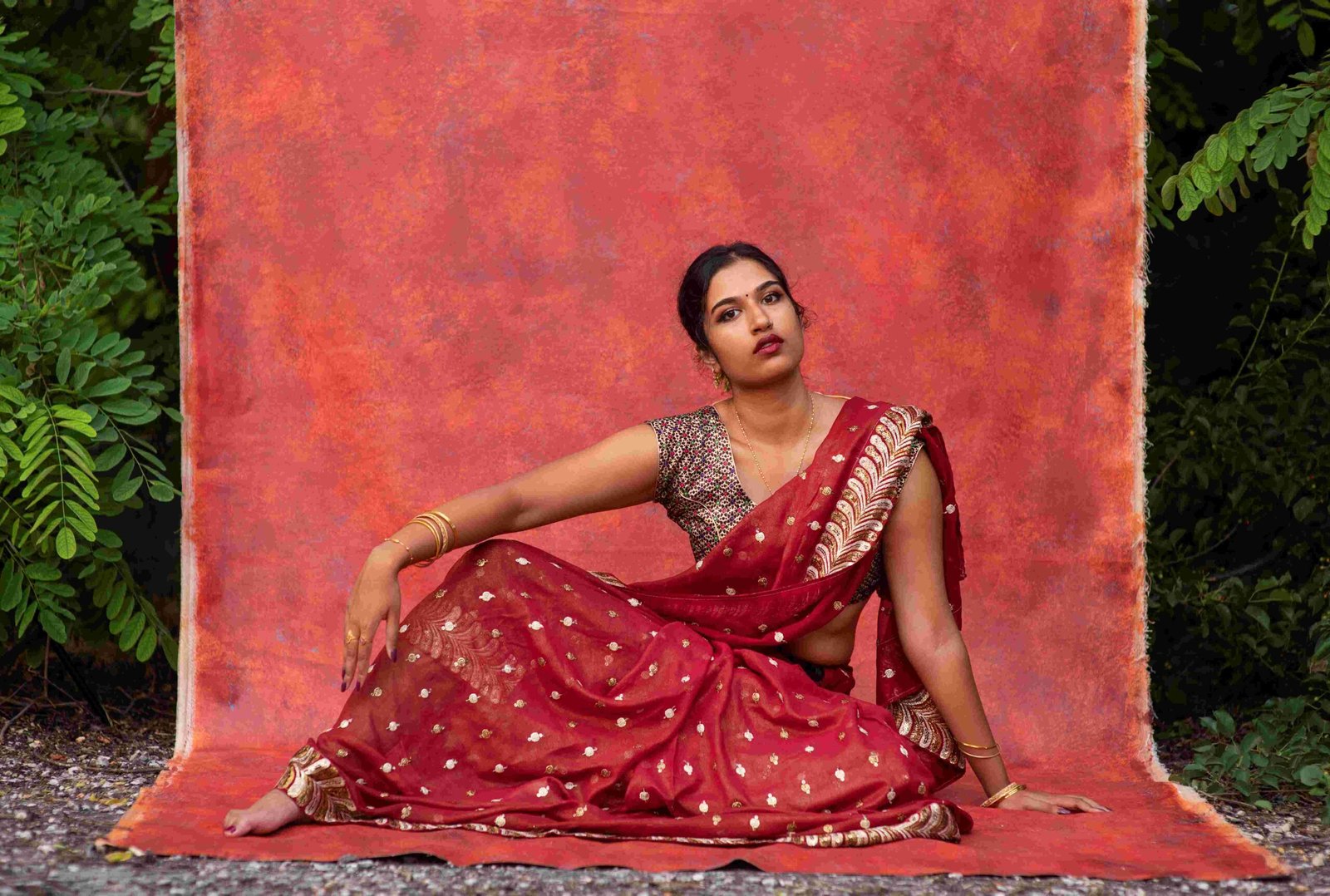
Among all the magnificent textile traditions that India has gifted to the world, the Kanchipuram saree occupies a throne of unrivalled prestige. Woven in the sacred town of Kanchipuram in Tamil Nadu — a city celebrated as much for its ancient temples as for its legendary silk weaving — these sarees are considered the ultimate expression of bridal magnificence in South India. What sets bridal Kanchipuram sarees apart from every other silk saree in the world is the extraordinary combination of weaving technique, raw material quality, and design philosophy that has been refined over centuries by master craftsmen.
The Sacred Legacy of Kanchipuram Weaving
Kanchipuram’s weaving tradition dates back more than two thousand years. Historical texts and temple sculptures attest to the town’s association with fine silk weaving from ancient times. The weavers of Kanchipuram, traditionally from the Devaanga and Saliyar communities, are believed to be descendants of the divine weaver Sage Markanda, who is said to have created fabric as fine as a lotus petal and as strong as a conch shell. This mythological heritage infuses every authentic Kanchipuram saree with a sense of spiritual significance that goes far beyond mere aesthetics.
The silk used in authentic Kanchipuram weaving is sourced from Bangalore and is known for its exceptionally high mulberry content, giving the finished fabric its characteristic density, weight, and lustrous sheen. The zari used in traditional weaves is real gold or silver zari with a silk core, which explains both the opulence and the enduring value of genuine Kanchipuram sarees. Pure silk sarees from Kanchipuram are identifiable by their distinctive weight, the way they hold their shape and structure, and the rich, deep sound they make when rubbed together — a test that experienced silk buyers have relied on for generations.
Understanding Temple Borders in Kanchipuram Sarees
One of the most iconic and beloved design elements of bridal Kanchipuram sarees is the temple border — a design motif inspired directly by the intricate carvings and architectural elements found on the gopurams and sanctuaries of South Indian temples. Temple borders typically feature rows of stylised depictions of temple towers, elephants, horses, yalis (mythical lion-like creatures), swans, and peacocks, all woven with extraordinary precision using the technique of interlocking wefts known as korvai.
The korvai technique, unique to Kanchipuram weaving, involves attaching the border to the body of the saree during the weaving process itself rather than sewing it on separately. This creates an inseparable union of body and border in which the colours can be entirely different yet perfectly integrated. When you see a pure silk sarees in deep crimson with a contrasting golden or dark green temple border, what you are witnessing is not two separate pieces of fabric — it is one continuous, miraculous creation woven on a single loom by hands that have mastered their craft over a lifetime.
Temple borders in Kanchipuram sarees can range from narrow, refined designs of three to four inches to grand, wide borders of eight inches or more that dominate the visual composition of the saree. Wider temple borders are particularly favoured for bridal wear, as they create a commanding, regal appearance that is deeply appropriate for the sacred occasion of a wedding. The motifs within these borders are often drawn from the iconography of specific temples — the Kanchi Kamakshi, the Ekambareswarar, or the Varadharaja Perumal — making each saree a devotional as well as an artistic creation.
The Splendour of Bridal Colour Choices
Colour selection is an art in itself when it comes to bridal Kanchipuram sarees. While the traditional and auspicious choice remains deep red — symbolic of fertility, prosperity, and the sacred bond of marriage — contemporary brides have expanded the palette considerably. Pure silk sarees in rich purple, deep teal, burnt orange, turmeric yellow, and forest green are equally popular today, each colour carrying its own symbolic resonance and visual impact.
The beauty of Kanchipuram silk’s natural dye absorption means that colours appear with extraordinary depth and vibrancy. A deep magenta Kanchipuram saree looks nothing like the same colour on synthetic fabric — it glows with an internal warmth that no machine-made material can replicate. When paired with a contrasting temple border in gold zari, the effect is nothing short of breathtaking.
Exclusive Designs for the Modern Bride
While traditional designs remain beloved, the bridal Kanchipuram market today offers an extraordinary range of exclusive designs that bridge classical artistry with contemporary sensibility. Master weavers and renowned silk houses have begun incorporating newer motifs alongside traditional temple designs — peacock bodies formed by intricate buttas, floral patterns inspired by Mughal artistry, geometric abstractions that complement modern blouse designs, and narrative weaves that tell stories from the Ramayana or Mahabharata across the body of the saree.
Some exclusive bridal collections feature sarees in which the pallu — the most visible draping section — is woven as a standalone masterpiece, featuring a complete temple composition with central deity motifs flanked by attendant figures, elephants, and the full architectural vocabulary of South Indian temple art. These are not just sarees but wearable paintings, and they command corresponding prices that reflect the hundreds of hours of skilled labour that go into their creation. Pure silk sarees of this calibre are truly once-in-a-lifetime acquisitions.
Authentication and Responsible Buying
The popularity of Kanchipuram sarees has unfortunately spawned a significant market for imitations. Sarees sold as Kanchipuram but woven elsewhere from inferior materials may look similar to the untrained eye but lack the quality, durability, and soul of authentic pieces. The Geographical Indication (GI) tag for Kanchipuram silk, granted by the Government of India, helps buyers identify genuine products from verified weavers and cooperatives.
When purchasing pure silk sarees for bridal purposes, always buy from reputable shops, cooperative societies, or verified online platforms that provide silk mark certification. Ask about the weight of the saree — genuine Kanchipuram silk is substantial and heavy, typically weighing between 700 grams and 1.2 kilograms. Request the silk mark label, which certifies the purity of the silk content. A genuine bridal Kanchipuram saree is an investment that will last a lifetime and beyond, so the effort of authentication is always worthwhile.
Exclusive bridal Kanchipuram sarees with rich temple borders are more than just garments for a wedding day. They are embodiments of a living textile tradition that has survived invasions, colonial rule, and industrial revolution to remain vibrant and magnificent in the twenty-first century. Every thread, every zari motif, every korvai border is a testament to human creativity, devotion, and the enduring power of beauty. When you drape yourself in one of these extraordinary creations on your wedding day, you become part of a story that is thousands of years old — and that story, like the saree itself, will endure forever.