
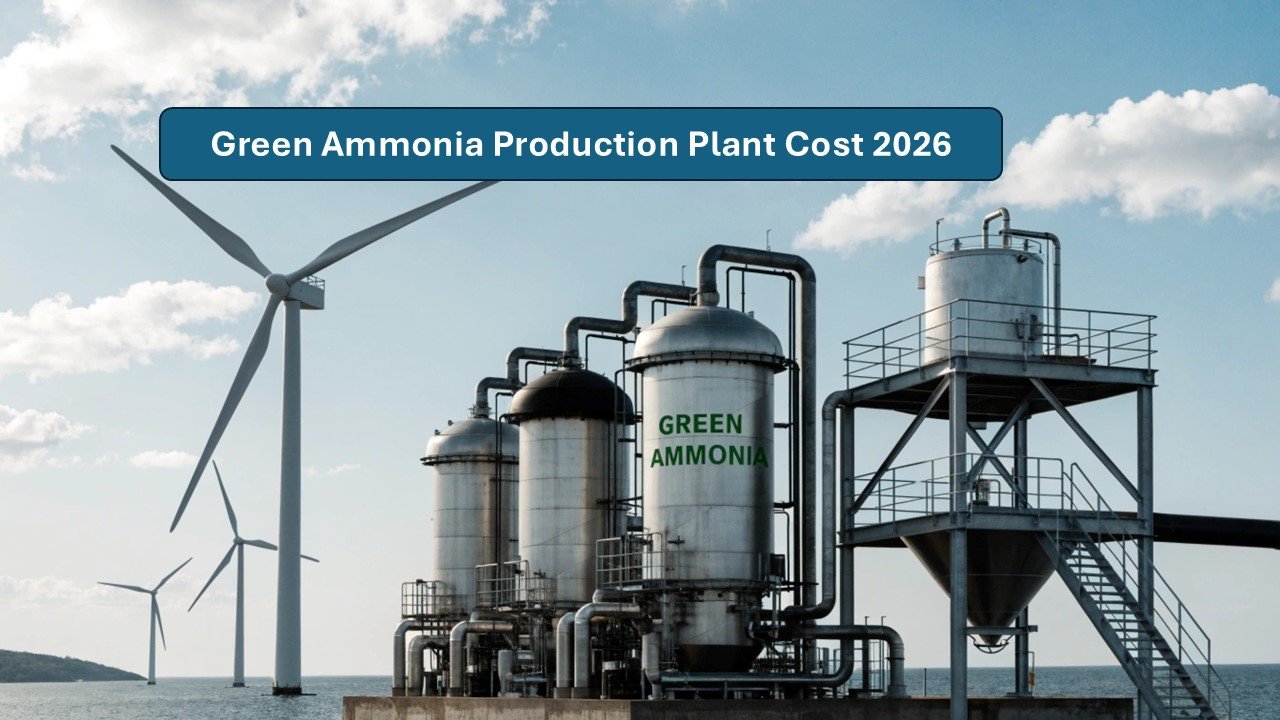
The Green Ammonia Production Plant Project Report 2026 provides a detailed feasibility and investment guide for setting up a manufacturing facility focused on producing green ammonia using renewable energy sources. Green ammonia is produced by combining nitrogen with hydrogen generated through the electrolysis of water powered by renewable electricity sources such as solar, wind, or hydropower. This process significantly reduces carbon emissions compared to conventional ammonia production methods, which rely on fossil fuel-derived hydrogen. Green ammonia is therefore viewed not only as a sustainable input for fertilizer production but also as an emerging low-carbon energy carrier for power generation, energy storage, and industrial applications.
The IMARC report outlines the complete business model for a green ammonia production plant — including unit operations, raw material requirements, utility needs, machinery and technology specifications, infrastructure requirements, operational cost structures, financial projections, and investment viability assessments. It provides essential insights for entrepreneurs, investors, and industrial developers aiming to participate in this rapidly growing sector.
Market Overview and Growth Potential
According to IMARC Group estimates, the global green ammonia market was valued at USD 722.0 Million in 2025 and is projected to expand substantially to USD 46,630.0 Million by 2034, exhibiting a CAGR of 58.9% from 2026 to 2034.
This impressive growth outlook reflects the increasing global focus on cleaner energy alternatives and decarbonization strategies across multiple sectors. Governments and industries worldwide are encouraging investment in green hydrogen and ammonia production through regulatory support, incentives for low-carbon technologies, and integration of renewables into industrial processes. Green ammonia’s potential as a carbon-neutral fuel and energy storage medium further attracts interest from power utilities, shipping sectors, and chemical manufacturers.
Request for a Sample Report: https://www.imarcgroup.com/green-ammonia-manufacturing-plant-project-report/requestsample
Plant Capacity and Production Scale
The proposed green ammonia manufacturing facility is designed with an annual production capacity of approximately 50,000 metric tons. This capacity allows the plant to achieve economies of scale while maintaining flexibility to respond to evolving market demand and renewable energy input availability.
The production process for green ammonia typically starts with water electrolysis using renewable electricity to generate green hydrogen, which is then combined with nitrogen (extracted from the air) through a catalytic synthesis process. The integrated sequence of unit operations — from raw material handling to ammonia synthesis and final product conditioning — ensures efficient, low-emission output.
Financial Viability and Profitability Analysis
IMARC’s financial projection highlights that green ammonia projects can deliver attractive profitability potential under normal market conditions. According to the report:
• Gross Profit Margin: 25–30%
• Net Profit Margin: 10–15%
These profit margin estimates reflect the value-added nature of green ammonia manufacturing, driven by rising demand for sustainable fertilizers and low-carbon energy inputs. They also indicate that even after accounting for operating costs and capital expenditures, green ammonia production can support competitive returns for investors.
The report’s financial analysis incorporates projections for income and expenditure, capital recovery, break-even timelines, and sensitivity to market pricing fluctuations — all of which are crucial for investment planning.
Operating Cost Structure
The operating cost distribution of a green ammonia production plant reflects the high energy intensity of electrolysis and the significant role of renewable power input. Based on IMARC’s cost analysis:
• Raw Materials / Energy Inputs: 70–80% of total operating expenses (OpEx)
• Utilities: 10–15% of OpEx
Since green hydrogen production through electrolysis requires substantial electricity, the cost of renewable power forms the lion’s share of operating expenses. Efficient sourcing of renewable energy (such as through power purchase agreements with solar/wind farms) and optimization of electrolyzer efficiency can help reduce these costs over time.
Other operating expenses include labor, maintenance, transportation, packaging, environmental compliance, and quality assurance — all of which are included within IMARC’s comprehensive OpEx model available in the full report.
Capital Investment Requirements
The IMARC feasibility study outlines the categories of capital investment necessary for establishing a green ammonia manufacturing facility. While exact numerical CapEx figures are available in the detailed paid report, the summary highlights the key components:
• Land acquisition and site development: Includes costs associated with purchase, regulatory compliance, and initial site preparation.
• Civil works and infrastructure: Construction of production halls, quality testing labs, storage tanks, and administrative units.
• Machinery and equipment: Includes electrolyzers for hydrogen production, air separation units for nitrogen capture, ammonia synthesis reactors, compressors, purification and cooling systems, and electric power conditioning infrastructure.
• Utilities and support systems: Installation of renewable power connections, water treatment systems, safety and monitoring platforms, and environmental control systems.
CapEx also covers initial working capital, safety infrastructure, and environmental compliance arrangements necessary before commissioning production.
Major Applications and Market Segments
Green ammonia’s applications extend across energy and industrial markets, with key uses including:
• Sustainable fertilizer production: Serving agricultural sectors that seek low-carbon nitrogen sources.
• Energy storage and transport: Acting as a carbon-neutral hydrogen carrier suitable for power grids and industrial applications.
• Power generation and clean fuels: Providing an alternative fuel for electricity production or blending in combustion systems with reduced emissions.
• Maritime and heavy transport fuel: Being evaluated as a zero-carbon marine fuel in emerging global shipping decarbonization frameworks.
These applications illustrate the broad potential for green ammonia beyond fertilizers — especially as industries seek energy vectors aligned with net-zero goals.
Why Invest in Green Ammonia Manufacturing?
Investing in a green ammonia production facility aligns with strategic global sustainability objectives and offers multiple commercial advantages:
Carbon-free production: Green ammonia eliminates CO₂ emissions during synthesis, making it attractive in markets operating under carbon pricing and emissions regulations.
Rising demand for clean fuels: Sectors including agriculture, energy storage, power generation, and transportation are increasingly seeking carbon-neutral inputs, supporting stable long-term demand.
Policy and regulatory support: Governments promoting renewable energy and clean industrial processes often offer incentives such as tax credits, renewable energy subsidies, and export benefits for green technology adoption.
Long-term market growth: With a projected global market valuation potential of USD 46,630 Million by 2034 and a high CAGR, the green ammonia sector presents robust growth prospects.
These factors collectively strengthen the investment case for green ammonia manufacturing, facilitating both economic returns and alignment with sustainability goals.
Ask Analyst for Customization: https://www.imarcgroup.com/request?type=report&id=28030&flag=C
Industry Leadership
The IMARC report also identifies major players in the global green ammonia landscape. Key producers involved in scaling up green ammonia production include:
• Yara International
• Haldor Topsoe
• OCI N.V.
• CF Industries
• Siemens Energy
These corporations are deploying renewable hydrogen and ammonia technologies across applications including fertilizers, clean fuels, and industrial feedstocks, illustrating the depth of market participation and competitive dynamics within the sector.
Conclusion
The Green Ammonia Production Plant Project Report 2026 provides a comprehensive investment guide covering technical processes, cost structures, financial viability, market dynamics, and strategic applications associated with establishing a green ammonia manufacturing facility. With projected growth to USD 46,630 Million by 2034, strong profitability potential (gross 25–30%, net 10–15%), and a clearly defined OpEx structure dominated by raw materials and utilities, green ammonia stands out as a compelling investment for businesses aligned with renewable energy transition and carbon-neutral industrial strategies.
How IMARC Can Help?
IMARC Group is a global management consulting firm that helps the world’s most ambitious changemakers to create a lasting impact. The company provide a comprehensive suite of market entry and expansion services. IMARC offerings include thorough market assessment, feasibility studies, company incorporation assistance, factory setup support, regulatory approvals and licensing navigation, branding, marketing and sales strategies, competitive landscape and benchmarking analyses, pricing and cost research, and procurement research.
Services:
- Plant Setup
- Factoring Auditing
- Regulatory Approvals, and Licensing
- Company Incorporation
- Incubation Services
- Recruitment Services
- Marketing and Sales
Contact Us:
IMARC Group
134 N 4th St. Brooklyn, NY 11249, USA
Email: sales@imarcgroup.com
Tel No:(D) +91 120 433 0800
United States: +1-201971-6302