
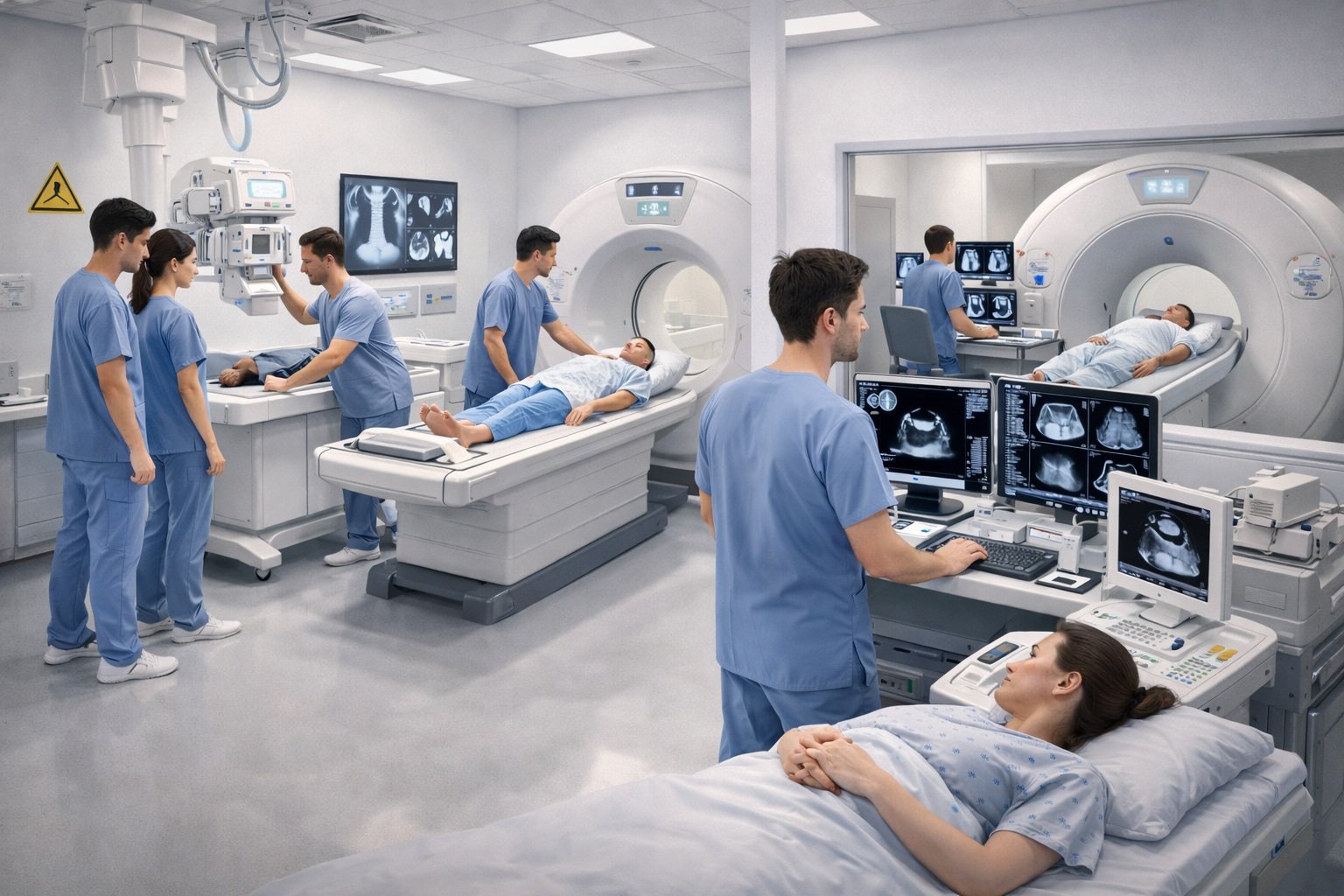
The healthcare industry relies heavily on advanced diagnostic tools to detect and treat diseases accurately. BS Radiography and Imaging Technology is an undergraduate program that equips students with the knowledge and skills to become experts in medical imaging. Graduates play a key role in ensuring accurate diagnosis and contributing to effective patient care.
Introduction to Radiography and Imaging Technology
Radiography and Imaging Technology focuses on using advanced imaging equipment to produce detailed images of the human body. These images are essential for diagnosing fractures, organ conditions, tumors, and other health issues. The program trains students in both the scientific principles behind imaging technologies and their practical clinical application.
What Students Learn in the Program
BS Radiography and Imaging Technology blends theoretical knowledge with hands-on clinical training. Students acquire skills that prepare them to work in hospitals, diagnostic centers, and research facilities.
Core Areas of Study
- Medical Anatomy and Physiology: Understanding the human body is fundamental for accurate imaging.
- Radiation Physics and Safety: Learning how to operate imaging equipment while minimizing radiation exposure.
- Diagnostic Imaging Techniques: Training in X-ray, CT scans, MRI, ultrasound, and fluoroscopy.
- Patient Care and Professional Ethics: Ensuring patient comfort and ethical practice during imaging procedures.
- Clinical Rotations: Gaining real-world experience by working under supervision in hospitals and diagnostic labs.
Why Radiography Professionals Are Important
Medical imaging specialists are the backbone of diagnostic healthcare. They help physicians make informed decisions by providing clear and accurate images of internal body structures. By applying both technical expertise and patient-care skills, radiography professionals directly contribute to better treatment outcomes.
Career Prospects for Graduates
A degree in BS Radiography and Imaging Technology opens a variety of career options:
- Radiologic Technologist: Operates X-ray and other imaging systems to produce diagnostic images.
- MRI Technologist: Specializes in magnetic resonance imaging for detailed internal imaging.
- CT Scan Technologist: Performs computed tomography scans for accurate diagnosis.
- Ultrasound Technician: Captures images of organs and tissues using high-frequency sound waves.
- Imaging Department Supervisor: Oversees operations and ensures quality standards in imaging departments.
Graduates may also pursue research, teaching, or specialized imaging careers after gaining experience.
Skills Needed to Succeed
To thrive in this field, students should possess:
- Attention to detail and precision
- Strong technical aptitude
- Compassion and communication skills for patient care
- Ability to work under pressure in clinical environments
- Problem-solving skills and adaptability to new technologies
The Future of BS Radiography and Imaging Technology
The demand for skilled imaging professionals is growing due to advancements in medical technology and increasing healthcare needs. Graduates can expect a stable career with opportunities for specialization, research, and leadership in hospitals, diagnostic centers, and medical research institutions.
Conclusion
BS Radiography and Imaging Technology is a highly rewarding and impactful degree. It combines technical expertise, scientific knowledge, and patient care skills, preparing students for essential roles in the healthcare system. For anyone interested in medical technology and diagnostic sciences, this program offers excellent career prospects and long-term professional growth. read more