
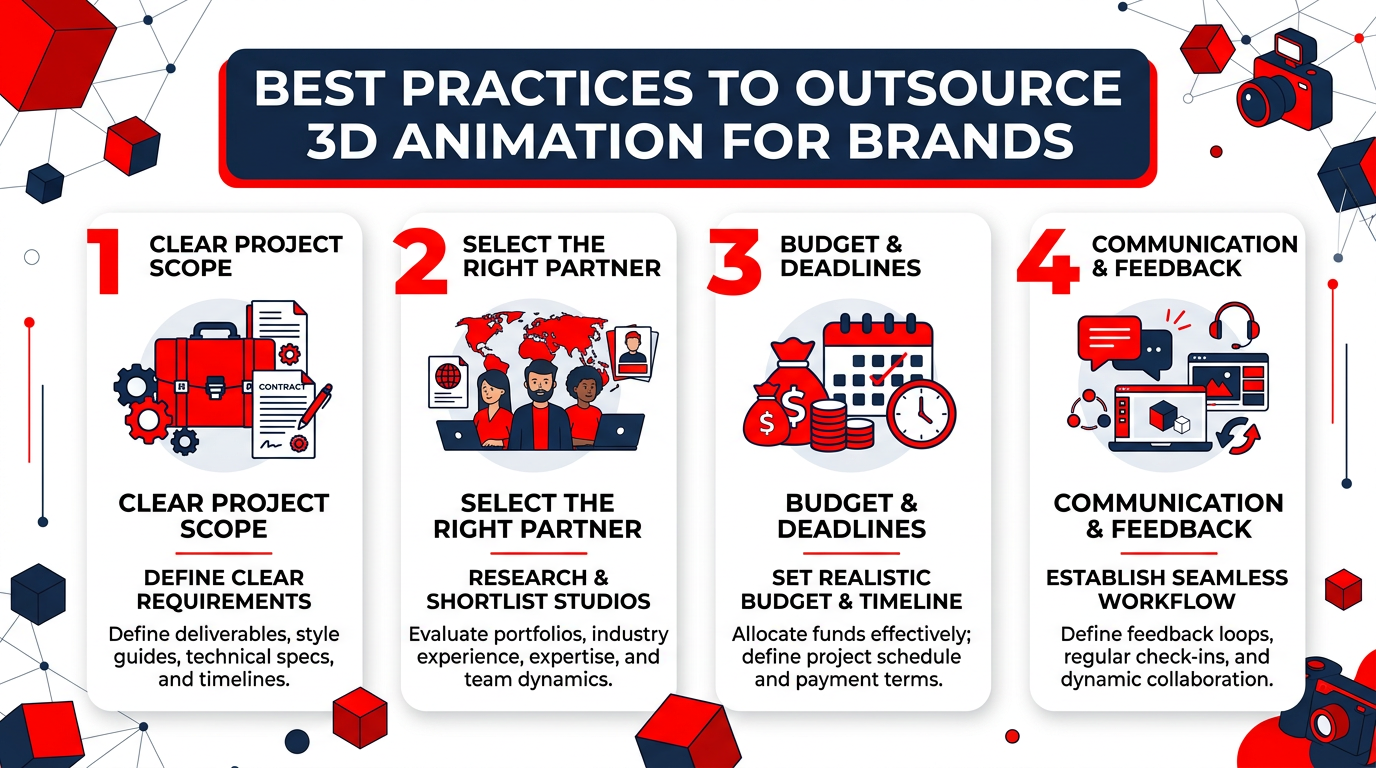
A campaign can be perfectly planned and still fall flat if the visuals don’t earn attention in the first two seconds. That’s why many marketing teams choose to outsource 3d animation when they need high-end motion work without slowing down the rest of the launch machine. The difference between a smooth project and a painful one usually comes down to process: clarity, approvals, and choosing a partner whose pipeline matches your needs.
1) Write a brief that sells the result, not just the style
Most animation headaches trace back to a brief that describes what the video should “look like,” but not what it must do. Before you share references, nail down the outcome: is this meant to create awareness, explain a complex product, drive sign-ups, support a sales deck, or increase conversions on a product page?
Then add context your animation partner can actually use—where the video will live (paid social, YouTube, CTV, website hero), who the audience is, what they already understand, and what they’re skeptical about. When the “one thing viewers must remember” is clear, storyboards become sharper and revision cycles shrink.
2) Make “on-brand” measurable for a 3D team
Brand guidelines often cover logos and fonts but skip the details that matter in 3D: lighting, materials, and camera language. Help your vendor by providing:
- Look references: 8–15 examples of the texture, contrast, and pacing you like
- Material cues: “soft-touch matte plastic,” “brushed aluminum,” “high-gloss lacquer,” etc.
- Color rules: exact values plus notes on how strict they are under different lighting
- Typography in motion: minimum sizes for mobile, safe margins, subtitle styling
- Do-not-do list: styles you want to avoid (overly game-like, too glossy, too “tech demo”)
3) Choose a partner for workflow fit, not just a flashy reel
A reel proves taste; it doesn’t prove process. When you evaluate studios or freelancers, look for evidence they can run a clean production: consistent communication, clear milestone approvals, and realistic timelines for rendering. Ask to see a project end-to-end (storyboard to animatic to finals), not just the final cut.
Also confirm who will actually touch your work—producer, art director, lead animator, compositor—and how feedback will be managed. A team that’s excellent at cinematic renders may not automatically be great at short-form performance creative, where the first seconds and on-screen text choices matter as much as the lighting.
4) Put scope, rights, and revisions in writing
Most budget overruns come from fuzzy scope. Your statement of work should spell out:
- Exact deliverables: resolution, frame rate, codec, audio mix requirements
- Milestones + approvals: storyboard sign-off, animatic lock, look-dev approval, final delivery
- Revision rules: number of rounds per phase and what counts as a “round”
- Licensing: music, fonts, stock assets, HDRIs—commercial usage confirmed
- IP ownership: clarify whether you receive working files (valuable for future edits)
A practical safeguard: treat the animatic as “picture lock.” Changes after that should trigger a simple change-order process.
5) Use approval gates to avoid expensive backtracking
3D production is iterative, but not all iterations cost the same. A clean sequence looks like:
- Storyboard approval (story, messaging, CTA placement)
- Animatic approval (timing, pacing, transitions)
- Style frames / look-dev (lighting, materials, color, key compositions)
- Blocking pass (rough animation, cameras, staging)
- Polish + final render (FX, compositing, motion blur, color, sound)
Assign one internal owner to consolidate stakeholder feedback. Conflicting notes (“make it brighter” vs “make it moodier”) can burn days.
6) QA for platforms before final delivery
Even strong animation can underperform if it isn’t platform-ready. Before final export, sanity-check the fundamentals:
- Text legibility on mobile (size, contrast, safe margins near UI elements)
- Color consistency (avoid crushed blacks or oversaturated highlights)
- Audio polish (clean VO, balanced music/SFX, correct loudness)
- Localization readiness (space for longer translations, editable text or clean plates)
- File performance (correct codecs and sizes for each channel)
Final thought
The best partnerships happen when brands bring clarity and vendors bring craft—then both sides move faster with fewer surprises. When you outsource 3d animation, consider the operational side too: coordinating feedback, shipping assets, tracking versions, and lining up launch checklists can be a lot, and a real estate virtual assistant can be a smart add-on if your team is stretched—if you want to hire, companies like Invedus, Wing Assistant, or HirewithNear are worth a look for reliable outsourcing support.