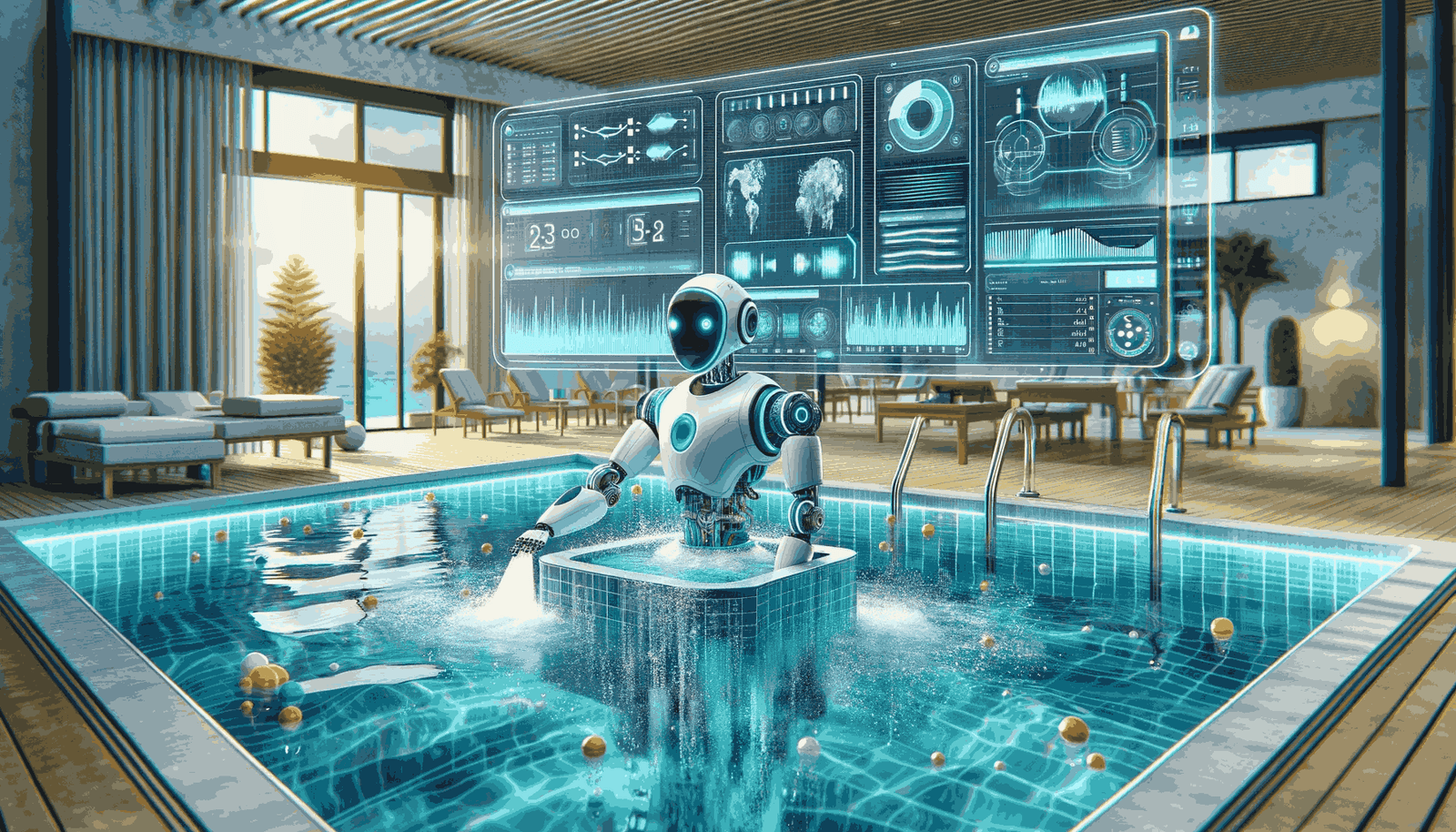
Swimming pools have long been a symbol of relaxation, luxury, and recreation. However, maintaining a clean and hygienic pool has never been effortless. Over the decades, pool care has undergone a remarkable transformation—from labor-intensive manual cleaning to the integration of advanced artificial intelligence (AI) robotics. This evolution has not only improved efficiency but also redefined convenience, cost-effectiveness, and sustainability in pool maintenance.
In this article, we explore the journey of pool cleaning technologies, the innovations shaping the industry today, and what the future holds for smarter, autonomous pool care.
The Era of Manual Pool Cleaning
In the early days, pool maintenance relied entirely on manual labor. Pool owners or hired professionals used basic tools such as skimmers, brushes, and manual vacuums to remove debris, scrub surfaces, and maintain water clarity.
Key Characteristics of Manual Cleaning:
- Time-consuming: Cleaning a pool could take hours, depending on size and condition.
- Labor-intensive: Required physical effort and regular attention.
- Inconsistent results: Human error often led to uneven cleaning.
- Limited reach: Corners, steps, and deep ends were harder to maintain effectively.
While manual cleaning laid the foundation for pool care, it quickly became evident that more efficient solutions were necessary, especially as pool ownership grew globally.
The Rise of Mechanical Pool Cleaners
The next major advancement came with mechanical pool cleaners. These devices, often powered by the pool’s filtration system, introduced automation into the cleaning process.
Types of Mechanical Cleaners:
- Suction-side cleaners: Connected to the pool’s skimmer and used suction to collect debris.
- Pressure-side cleaners: Utilized water pressure to move around and capture dirt in attached bags.
- Robotic cleaners (early versions): Operated independently but with limited intelligence and navigation.
Benefits:
- Reduced manual effort
- More consistent cleaning patterns
- Improved debris collection
However, these systems still had limitations, including random navigation patterns, dependency on pool systems, and limited adaptability to different pool shapes.
The Introduction of Robotic Pool Cleaners
Robotic pool cleaners marked a turning point in the evolution of pool care. Unlike earlier systems, these devices operated independently of the pool’s filtration system and came equipped with built-in motors, filters, and programmable controls.
Features of Early Robotic Cleaners:
- Self-contained filtration systems
- Pre-programmed cleaning cycles
- Basic navigation capabilities
- Energy efficiency compared to traditional systems
These robots significantly reduced the need for human intervention and offered a more thorough cleaning experience. However, their navigation was still somewhat random, and they lacked the intelligence to optimize cleaning paths.
The AI Revolution in Pool Cleaning
The integration of artificial intelligence has transformed robotic pool cleaners into smart, adaptive machines. Today’s AI-powered pool robots are capable of learning, mapping, and optimizing their cleaning processes in real time.
Advanced AI Features:
- Smart navigation systems: Use sensors and algorithms to map the pool and avoid obstacles.
- Adaptive cleaning modes: Adjust cleaning intensity based on debris levels and surface type.
- Remote control and app integration: Users can control and monitor cleaning via smartphones.
- Energy optimization: AI ensures efficient power usage by focusing only on areas that need attention.
- Self-parking and scheduling: Robots can dock themselves and operate on preset schedules.
These innovations have made pool maintenance more efficient, precise, and user-friendly than ever before.
The Shift to Cordless Technology
One of the most significant recent advancements is the development of cordless robotic pool cleaners. By eliminating cables, these devices offer greater mobility, safety, and ease of use.
Advantages of Cordless Pool Robots:
- No tangled wires or setup complications
- Enhanced freedom of movement
- Safer operation in water
- Sleek and compact design
- Easy retrieval and storage
As a leading Cordless Pool Robot Manufacturer, hydrarobo is at the forefront of this innovation, delivering cutting-edge solutions that combine AI intelligence with cordless convenience. Their products exemplify how modern engineering can simplify pool maintenance while maximizing performance.
Sustainability and Energy Efficiency
Modern pool cleaning technologies are not just about convenience—they also focus on sustainability. AI-powered and cordless robots are designed to consume less energy and reduce water waste.
Eco-Friendly Benefits:
- Lower electricity consumption compared to traditional systems
- Reduced reliance on pool pumps and filtration systems
- Efficient debris removal, leading to fewer chemical treatments
- Longer product lifespan, minimizing environmental impact
As environmental awareness grows, these features are becoming increasingly important for both residential and commercial pool owners.
The Future of Pool Care
The evolution of pool care is far from over. Emerging technologies are set to push the boundaries even further.
What to Expect:
- Enhanced AI capabilities: Robots that can predict maintenance needs and detect water quality issues.
- Integration with smart home systems: Seamless control through voice assistants and centralized apps.
- Advanced sensors: Real-time monitoring of pool conditions, including pH levels and temperature.
- Autonomous maintenance ecosystems: Fully automated systems that handle cleaning, filtration, and chemical balancing.
These innovations will continue to redefine the pool ownership experience, making maintenance virtually effortless.
Conclusion
From manual scrubbing to intelligent, cordless AI robots, the journey of pool care reflects the broader evolution of technology and automation. What was once a time-consuming chore has now become a streamlined, efficient, and even enjoyable process.
Companies like hydrarobo are leading this transformation, setting new standards in innovation and performance. As technology continues to advance, pool care will only become smarter, more sustainable, and more accessible—ensuring that pool owners can focus less on maintenance and more on enjoying their investment.