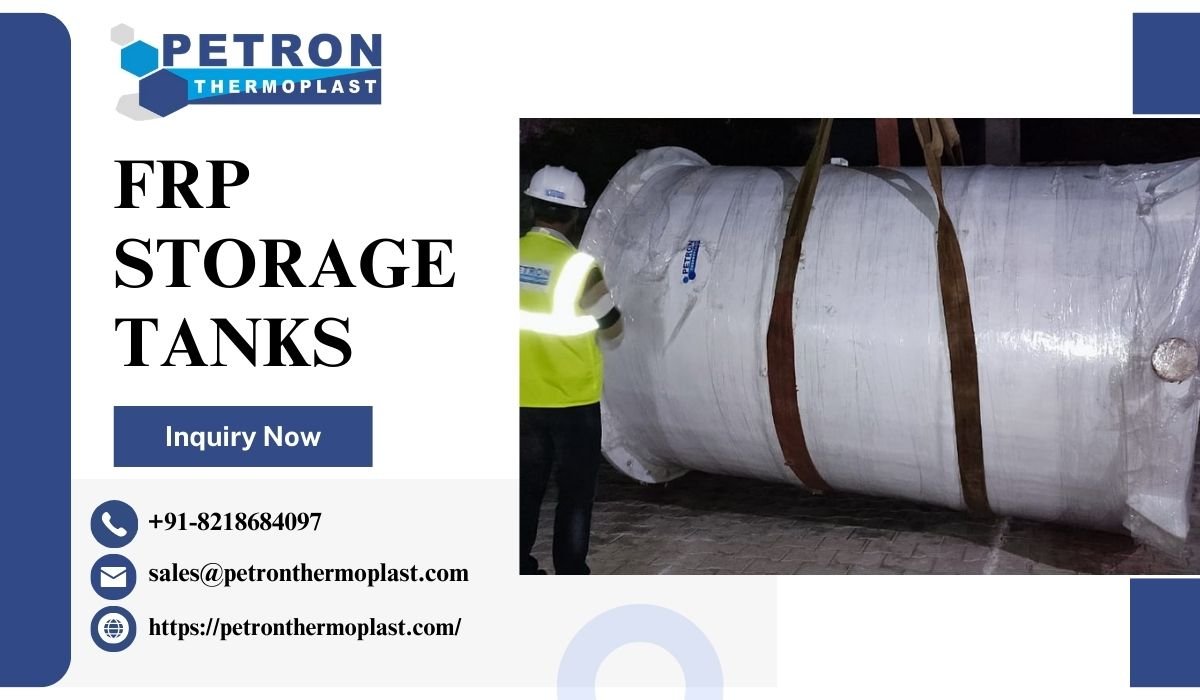
In modern industrial environments, storage systems are exposed to some of the harshest operating conditions imaginable—highly corrosive chemicals, extreme temperatures, UV radiation, pressure fluctuations, and continuous operation. Choosing the right storage tank is not just a matter of capacity; it is a matter of safety, durability, and long-term operational reliability. This is where FRP storage tanks have emerged as a preferred solution across industries.
FRP storage tanks are specifically engineered to withstand extreme chemical, mechanical, and environmental conditions, making them ideal for chemical processing, water treatment, power generation, and heavy industrial applications. This blog explores how FRP (Fiber Reinforced Plastic) storage tanks are designed, why they outperform traditional materials, and why industries trust them for critical operations.
Understanding FRP Storage Tanks
FRP storage tanks are composite structures manufactured using reinforcing fibers (such as glass fiber) embedded in a thermosetting resin matrix like polyester, vinyl ester, or epoxy. This combination results in a material that is lightweight yet exceptionally strong, corrosion-resistant, and adaptable to demanding industrial conditions.
Unlike metal tanks, FRP tanks do not rely on coatings or linings to resist corrosion. Their resistance is built into the material itself, ensuring long service life even when handling aggressive chemicals.
Challenges of Extreme Industrial Conditions
Industrial storage tanks are often subjected to:
- Highly corrosive acids, alkalis, and solvents
- Continuous exposure to high or fluctuating temperatures
- Outdoor environments with UV radiation and weather extremes
- Mechanical stresses from fluid pressure and structural loads
- Abrasive or reactive chemical media
Traditional storage materials such as carbon steel or concrete may degrade, corrode, or crack under these conditions. FRP storage tanks are designed to address these challenges holistically.
How FRP Storage Tanks Withstand Extreme Conditions?
- Exceptional Chemical Resistance
One of the strongest advantages of FRP storage tanks is their outstanding resistance to corrosion. By selecting the appropriate resin system, FRP tanks can safely store:
- Sulfuric acid
- Hydrochloric acid
- Sodium hypochlorite
- Caustic soda
- Industrial effluents and waste chemicals
This chemical compatibility ensures zero contamination, reduced risk of leaks, and extended service life, even in highly aggressive environments.
- Structural Strength Without Excess Weight
Despite being lightweight, FRP storage tanks offer high tensile strength and impact resistance. The fiberglass reinforcement provides excellent load-bearing capacity, allowing tanks to handle:
- High-volume storage
- Elevated fluid pressure
- Structural stresses from installation and operation
The lightweight nature of FRP also simplifies transportation, handling, and installation, reducing overall project costs.
- Temperature Resistance for Harsh Operations
FRP storage tanks are designed to operate reliably across a wide temperature range. Depending on resin selection, they can withstand:
- Elevated process temperatures
- Sudden temperature fluctuations
- Outdoor heat exposure in extreme climates
This thermal stability makes FRP tanks suitable for chemical plants, power stations, and industrial processes where temperature control is critical.
- UV and Weather Resistance for Outdoor Installations
For industries that require outdoor storage, FRP tanks are engineered with UV-resistant gel coats and surface treatments. These features protect the tank from:
- Sunlight degradation
- Rain, humidity, and atmospheric exposure
- Long-term environmental wear
As a result, FRP tanks maintain structural integrity and appearance even after years of outdoor use.
- Leak-Proof and Seamless Construction
FRP storage tanks are typically manufactured using filament winding or hand lay-up processes, ensuring seamless construction without welded joints. This eliminates common failure points found in metal tanks and provides:
- Enhanced leak prevention
- Improved pressure handling
- Increased safety for hazardous chemical storage
Custom Engineering for Extreme Applications
One of the key advantages of FRP storage tanks is their customizability. Tanks can be designed to meet specific project requirements, including:
- Vertical or horizontal configurations
- Custom diameters, heights, and capacities
- Special nozzles, flanges, and access ports
- Internal linings tailored to specific chemicals
This design flexibility allows FRP tanks to perform reliably even in the most demanding industrial environments.
Applications Requiring Extreme Durability
FRP storage tanks are widely used in industries where failure is not an option:
Chemical Processing Plants
For storing acids, alkalis, and reactive chemicals safely and efficiently.
Water & Wastewater Treatment
Ideal for chlorine, coagulants, effluents, and treatment chemicals.
Power Plants
Used for chemical dosing systems, cooling water additives, and effluent storage.
Fertilizer & Specialty Chemicals
Ensures safe containment of aggressive and temperature-sensitive materials.
Mining & Metal Processing
Suitable for slurry storage, leaching chemicals, and process fluids.
Safety and Compliance Considerations
FRP storage tanks are designed to comply with international engineering standards and industrial safety requirements. Proper design, material selection, and quality control ensure:
- Safe containment of hazardous substances
- Reduced risk of environmental contamination
- Compliance with industrial and EPC project specifications
When manufactured by experienced suppliers, FRP tanks offer reliable performance throughout their lifecycle.
Maintenance Benefits in Extreme Conditions
Another major advantage of FRP storage tanks is their low maintenance requirement. Unlike metal tanks, they do not require frequent repainting, corrosion protection, or costly repairs. This results in:
- Lower total cost of ownership
- Reduced downtime
- Longer operational lifespan
Even in extreme conditions, FRP tanks maintain performance with minimal intervention.
Why Choose Petron Thermoplast for FRP Storage Tanks?
At Petron Thermoplast, FRP storage tanks are engineered with a focus on durability, safety, and performance. Our tanks are designed to withstand the toughest industrial environments through:
- High-quality raw materials and resin systems
- Precision manufacturing and strict quality checks
- Custom fabrication for industrial and EPC projects
- Export-grade standards for global markets
With extensive experience in industrial thermoplastic and composite solutions, Petron Thermoplast delivers FRP storage tanks you can rely on for long-term operations.
Conclusion
Extreme industrial conditions demand storage solutions that go beyond conventional materials. FRP storage tanks offer unmatched chemical resistance, structural strength, thermal stability, and environmental durability, making them the ideal choice for critical industrial applications.
Designed to withstand corrosion, temperature extremes, and continuous operation, FRP storage tanks provide safety, reliability, and cost efficiency over their entire service life. For industries seeking dependable storage solutions under harsh conditions, FRP tanks are not just an option—they are a necessity. If you are planning an industrial project that requires robust, long-lasting storage, FRP storage tanks from Petron Thermoplast deliver performance you can trust.