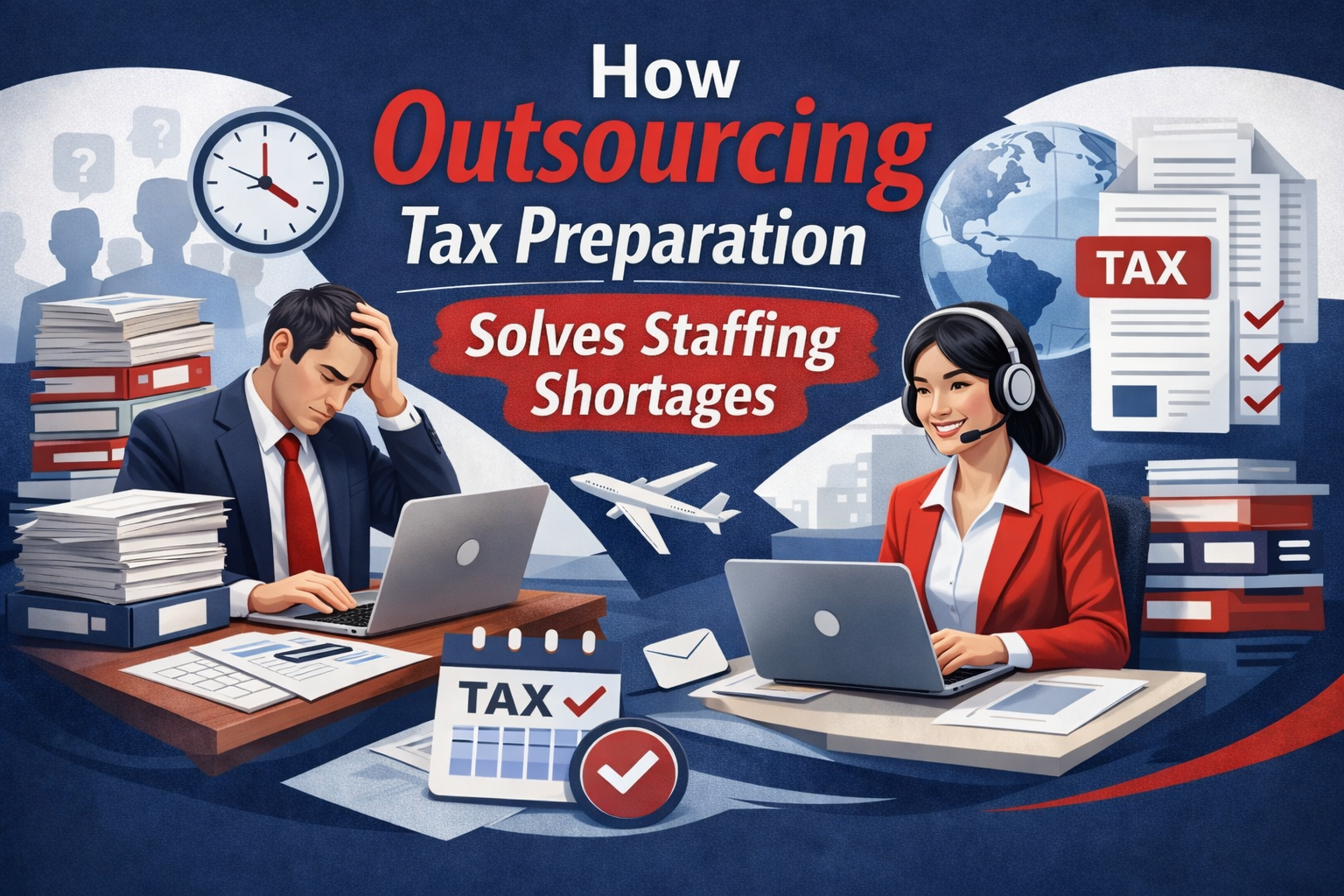
Tax season has a way of exposing every weak point in a firm’s operations. Deadlines stack up, workloads double overnight, and even experienced teams begin to feel the pressure. Hiring more staff sounds like the obvious solution, but recruitment takes time, training requires resources, and demand isn’t always consistent throughout the year. This is where outsourcing tax preparation becomes a practical option for firms looking to maintain performance without overextending their internal teams.
The Growing Challenge of Staffing in Tax Firms
Staffing shortages are not just about a lack of people they’re about finding the right talent at the right time. Many accounting firms struggle to recruit skilled professionals who can handle complex tax regulations, meet tight deadlines, and maintain accuracy under pressure.
Seasonal demand makes things even more complicated. During peak periods, firms need additional support, but once the season ends, maintaining a larger workforce can become financially unsustainable. This imbalance often leads to overworked employees, increased errors, and slower turnaround times.
Why Traditional Hiring Falls Short
Hiring full-time employees may seem like a long-term solution, but it comes with several challenges:
- High recruitment costs: Advertising, interviews, and onboarding require both time and money.
- Training demands: New hires need time to adapt to systems and processes.
- Limited flexibility: Staffing needs fluctuate, but full-time roles remain constant.
As a result, firms often find themselves either understaffed during busy periods or overstaffed during slower months. Neither scenario is ideal for maintaining efficiency or profitability.
Access to Skilled Talent Without Delays
One of the biggest advantages of outsourcing is immediate access to experienced professionals. Instead of spending weeks or months searching for candidates, firms can connect with trained tax specialists who are ready to contribute from day one.
These professionals are often familiar with a wide range of tax systems and compliance requirements. Their experience allows them to handle tasks efficiently, reducing the burden on in-house teams and ensuring that deadlines are met without unnecessary stress.
Improving Efficiency During Peak Seasons
Tax season doesn’t wait, and delays can have serious consequences. By bringing in external support, firms can manage high workloads without compromising on quality.
Outsourced teams can work alongside internal staff, handling routine and time-consuming tasks such as data entry, document organization, and return preparation. This allows in-house professionals to focus on higher-value activities like client communication and strategic planning.
The result is a smoother workflow, faster turnaround times, and a more balanced distribution of work.
Reducing Employee Burnout and Turnover
Long hours and constant pressure can quickly lead to burnout. When employees are overwhelmed, productivity drops, and the risk of errors increases. Over time, this can also lead to higher staff turnover, creating even more challenges for firms.
By distributing workloads more effectively, outsourcing helps create a healthier work environment. Employees can focus on their core responsibilities without being stretched too thin, which improves job satisfaction and retention.
Cost-Effective Workforce Management
Managing costs is a constant concern for any business. Outsourcing offers a flexible approach that aligns expenses with actual workload.
Instead of committing to full-time salaries, benefits, and infrastructure, firms can scale their workforce based on demand. This approach reduces overhead costs while still providing access to high quality talent.
It also allows firms to invest resources in areas that drive growth, such as client acquisition and service expansion.
Maintaining Accuracy and Compliance
Accuracy is critical in tax preparation. Errors can lead to penalties, audits, and damaged client relationships. Outsourced professionals often work within structured processes that include multiple levels of review and quality checks.
These systems help ensure that returns are accurate and compliant with current regulations. With fewer errors and more consistent results, firms can build stronger trust with their clients.
A Scalable Solution for Growing Firms
Growth brings new opportunities, but it also increases operational demands. Firms that want to expand their client base need a reliable way to handle additional workload without compromising service quality.
Outsourcing provides that flexibility. Whether it’s a temporary increase in demand or long-term growth, firms can adjust their support levels as needed. This scalability makes it easier to take on new clients and explore new opportunities without the risk of overcommitting resources.
Final Thoughts
Staffing shortages don’t have to limit a firm’s potential. With the right strategy, it’s possible to maintain efficiency, reduce stress, and continue delivering high-quality services even during the busiest periods. Outsourcing tax preparation offers a practical way to achieve this balance by providing access to skilled professionals, improving workflow efficiency, and reducing operational strain.
For firms considering this approach, exploring outsourcing tax return preparation can be a smart next step. If you’re planning to hire, look for reliable outsourcing partners like Invedus, Wing Assistant, or Hire With Near. Choosing the right partner can make all the difference in building a scalable and efficient tax practice.