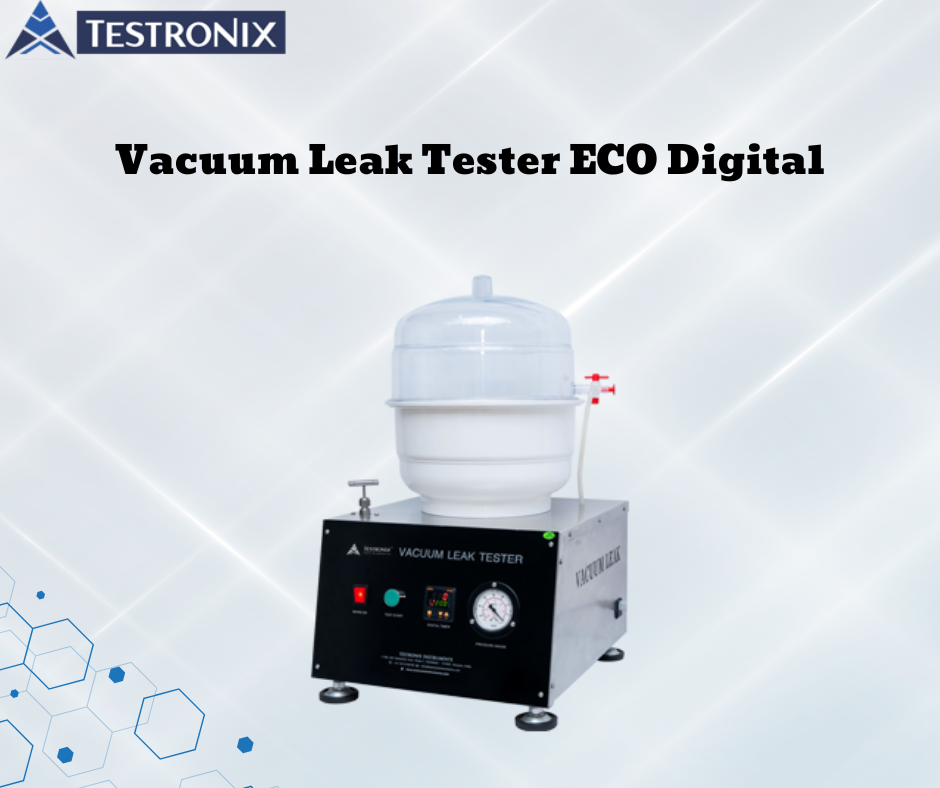
A vacuum leak tester plays a vital role in identifying leaks, verifying product integrity, and ensuring compliance with industry standards. Whether in automotive, medical devices, packaging, or electronics, the right testing equipment can dramatically enhance production efficiency and reduce rework costs. Understanding how to select the ideal vacuum test machine and what affects the vacuum test machine price is essential for achieving consistent results within your budget..
The Importance of Choosing the Right Tester
Selecting the right vacuum leak testing solution involves evaluating performance requirements, test sensitivity, and long-term cost efficiency. The right equipment can streamline production, minimize downtime, and improve overall product reliability. Below are the key factors and considerations to help manufacturers make an informed decision that aligns with operational goals and quality assurance standards.
Evaluate Your Application Requirements
Different industries have different testing needs. Before you buy a vacuum leak tester, make sure you know the size, material type, and operating pressure of the product you want to test. For instance, a company that makes medical devices might need very sensitive leak detection to meet strict rules, while a company that makes packaging might care more about speed and throughput.
Knowing what you need the tester for helps you figure out what kind of tester you need, how far it can detect things, and how much automation you need. This step makes sure that the equipment you choose is right for your production environment.
Determine the Desired Sensitivity Level
Leak detection sensitivity is one of the most critical parameters when choosing a vacuum test machine. Different applications demand varying levels of precision. A small electronic component may require micro-level sensitivity, while larger industrial assemblies may need moderate detection levels. Consider whether you need to identify minute leaks or verify overall vacuum retention. Understanding the appropriate sensitivity range prevents over-specifying or underperforming equipment, ensuring that your testing process remains efficient and cost-effective.
Compare Test Methods and Technologies
Vacuum leak testers operate using different methods, including pressure decay, vacuum differential, and tracer gas techniques. Each approach has distinct advantages depending on the application. Pressure decay testing offers simplicity and cost-effectiveness, while tracer gas methods like helium testing deliver higher precision for critical components. Evaluating which method best fits your performance goals can help balance accuracy, speed, and cost. Manufacturers should also consider how easily the chosen method integrates into existing production lines and automation systems.
Assess Build Quality and Durability
To keep performance consistent in tough production environments, durability and construction quality are very important. A strong vacuum test machine made of materials that don’t rust makes sure that it will work reliably for a long time. Find testers that can handle changes in temperature, vibration, and running all the time. The length of time your equipment lasts has a direct effect on maintenance costs and uptime. So, choosing a machine that has a history of being durable gives you long-term value and reliable operation.
Analyze Software and Data Capabilities
Modern vacuum leak testers are increasingly integrated with smart features, digital interfaces, and data tracking capabilities. Advanced software allows manufacturers to monitor test results in real time, store historical data, and optimize process control. Data-driven insights help identify trends, detect anomalies, and support continuous improvement initiatives. When evaluating your options, consider the ease of use, compatibility with other systems, and level of automation. Intelligent data management not only boosts accuracy but also enhances traceability and compliance documentation.
Consider Maintenance and Calibration Requirements
Reliable test performance depends on proper maintenance and periodic calibration. Before purchasing, evaluate how easy it is to maintain the vacuum leak tester and whether calibration can be done in-house or requires specialized support. Some models are designed with user-friendly calibration procedures, reducing downtime and operational costs. Selecting a system with accessible service options ensures long-term accuracy and compliance with industry testing standards.
Review the Total Cost and Return on Investment
While the vacuum test machine price is an important factor, it should not be the sole deciding element. Beyond the initial purchase cost, consider the total cost of ownership, including maintenance, energy consumption, and operational efficiency. A higher-quality tester may offer faster cycle times, fewer false rejects, and reduced operator intervention, leading to greater productivity and lower lifetime costs. Evaluating ROI from a performance and reliability perspective helps make a balanced investment decision.
Explore Supplier Support and Global Availability
For international manufacturers, after-sales support and global service availability are essential. A reliable supplier should offer comprehensive technical assistance, spare parts accessibility, and training programs to ensure optimal equipment performance. When sourcing a vacuum leak tester, consider the supplier’s reputation, responsiveness, and ability to provide ongoing support across different regions. These factors can significantly influence your long-term satisfaction and operational efficiency.
Embrace technological advances for better efficiency
Advancements in leak detection technology have introduced automated calibration, IoT connectivity, and advanced analytics capabilities. Modern vacuum test machines now combine precision with user-friendly interfaces, enabling manufacturers to improve process control while maintaining high throughput. Staying updated with the latest innovations ensures that your testing operations remain efficient, compliant, and adaptable to evolving production demands.
Conclusion
Selecting the right vacuum leak tester is a strategic decision that impacts product quality, compliance, and production efficiency. By carefully evaluating your application requirements, testing methods, and long-term value, you can choose equipment that delivers accuracy, durability, and cost-effectiveness. With the right vacuum test machine, manufacturers can achieve consistent leak detection performance, enhance operational reliability, and strengthen overall quality assurance across global production lines.