Imagine it’s the peak of summer, and you’re stuck in a sweltering home during a power outage. The grid has failed again, leaving you drenched in sweat as the temperature climbs relentlessly. That’s what happened to Sarah, a homeowner in sunny California, who grew tired of skyrocketing electricity bills and unreliable power. One scorching afternoon, she decided to take control. By harnessing the sun’s energy, Sarah transformed her cooling system into an eco-friendly powerhouse. This is the story of how she learned to run her air conditioner on solar power, slashing her costs and gaining energy independence. If you’re facing similar challenges, discovering how to run your air conditioner on solar power could be your game-changer too.
Understanding the Basics of Solar-Powered AC
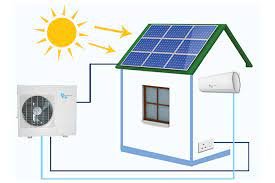
Switching to solar for cooling isn’t just about going green—it’s a practical solution for reducing dependence on traditional electricity. At its core, running an AC on solar involves converting sunlight into usable energy to power your unit. This can be done through off-grid setups, where you’re completely independent, or grid-tied systems that supplement your utility power.
Solar energy works by using photovoltaic (PV) panels to generate direct current (DC) electricity, which is then converted to alternating current (AC) via an inverter. For air conditioners, which typically consume a lot of power, the key is matching your system’s capacity to your cooling needs. Whether you have a window unit, central AC, or a mini-split, the principles remain similar.
Types of Solar AC Systems
There are two main approaches: hybrid solar AC units and standard ACs retrofitted with solar components. Hybrid models, like those from brands such as EG4, are designed to run directly on solar during the day and switch to grid or battery power when needed. These are efficient and often come as kits with built-in inverters.
For existing ACs, you’ll need to add solar panels, an inverter, and possibly batteries. Off-grid systems store excess energy in batteries for nighttime use, while on-grid setups feed surplus power back to the utility, potentially earning credits.
Calculating Your Power Requirements
Before diving in, precise calculations ensure your setup works efficiently. Start by assessing your air conditioner’s energy consumption.
Determining AC Wattage and Usage
Air conditioners are rated in BTUs (British Thermal Units), but for solar, focus on watts. A typical 5,000 BTU window unit might use 500-700 watts per hour, while a central 3-ton system could demand 3,000-5,000 watts. Check your model’s energy label or use a wattage meter.
Factor in runtime: If your AC runs 8 hours daily in hot weather, multiply watts by hours for daily kilowatt-hours (kWh). For example, a 3,000-watt unit running 8 hours consumes 24 kWh. In sunny areas, aim to generate at least that much from solar.
Sizing Your Solar Panels
Panel sizing depends on your location’s sunlight hours—typically 4-6 hours of peak sun daily in the U.S. To cover a 24 kWh need with 5 sun hours, you’d require about 4.8 kW of panels (24 kWh / 5 hours).
Standard panels are 300-400 watts each, so for 4.8 kW, that’s roughly 12-16 panels. However, for just the AC, you might scale down. Tools like online solar calculators can refine this based on your zip code and roof space.
Choosing the Right Equipment
Selecting components is crucial for reliability and cost-effectiveness.
Solar Panels and Inverters
Opt for high-efficiency monocrystalline panels, which perform better in limited space. Brands like SunPower or LG offer durable options with 20-25 year warranties.
The inverter is the heart of the system. For ACs with high startup surges (up to 3x running watts), choose a pure sine wave inverter rated at least 1.5 times your AC’s peak load. Microinverters or string inverters work, but hybrids like those from SolarEdge integrate seamlessly with batteries.
Batteries for Energy Storage
If you want to run your AC after sunset, batteries are essential. Lithium-ion options, such as Tesla Powerwall or generic deep-cycle batteries, store excess daytime energy. For a 3,000-watt AC running 4 evening hours, you’d need at least 12 kWh of usable storage. Depth of discharge (DoD) matters—lithium allows 80-90% usage without damage.
Consider complete kits: Some include panels, inverter, and batteries tailored for AC loads, starting at $2,000-$5,000 for small setups.
Step-by-Step Installation Guide
Installing a solar AC system can be DIY for simple window units or require professionals for larger ones. Always prioritize safety and local permits.
Preparing Your Site
Assess your roof or ground space for panels—south-facing with minimal shade is ideal. For window ACs, a ground-mounted array near the unit works well.
Gather tools: Multimeter, wiring, mounts, and safety gear. If grid-tied, coordinate with your utility for net metering.
Setting Up the System
- Mount the panels securely, angling them toward the sun (latitude +15 degrees for summer optimization).
- Connect panels in series/parallel to match inverter voltage.
- Wire to the charge controller (for battery systems) to prevent overcharging.
- Link the inverter to your AC circuit. For dedicated setups, use a transfer switch to isolate the AC from the grid.
- Install batteries in a ventilated area, connecting them to the inverter.
Test the system: On a sunny day, monitor output with apps or meters. Professional installation costs $1,000-$3,000 but ensures compliance.
Maintenance and Efficiency Tips
To keep your system running smoothly, regular upkeep is key.
Clean panels monthly to remove dust, which can reduce efficiency by 20%. Inspect wiring for wear and monitor battery health via apps.
Boost efficiency: Use energy-efficient ACs (SEER rating 20+), insulate your home, and run the unit during peak sun hours. Smart thermostats can automate this, maintaining constant temps to avoid surges.
Common pitfalls: Undersizing leads to brownouts; oversizing wastes money. Start small and expand.
Cost Analysis and Incentives
Initial costs vary: A basic setup for a window AC might be $1,000 (2-4 panels + inverter), while whole-home central AC solar could reach $10,000-$20,000 before incentives.
Federal tax credits (30% via ITC) and state rebates cut this significantly. Payback period? 5-10 years, with savings of $500-$1,500 annually on bills.
Environmentally, it’s a win: Reducing carbon footprint by offsetting fossil fuel use.
Conclusion
Embracing how to run your air conditioner on solar power not only cools your home sustainably but also empowers you against rising energy costs and outages. Like Sarah, who now enjoys reliable comfort while saving hundreds yearly, you can achieve energy freedom. With proper planning, equipment, and maintenance, this transition is accessible and rewarding. Start assessing your needs today— the sun is waiting to power your cooler tomorrow. Whether for eco-reasons or savings, mastering how to run your air conditioner on solar power is a step toward a brighter, greener future.