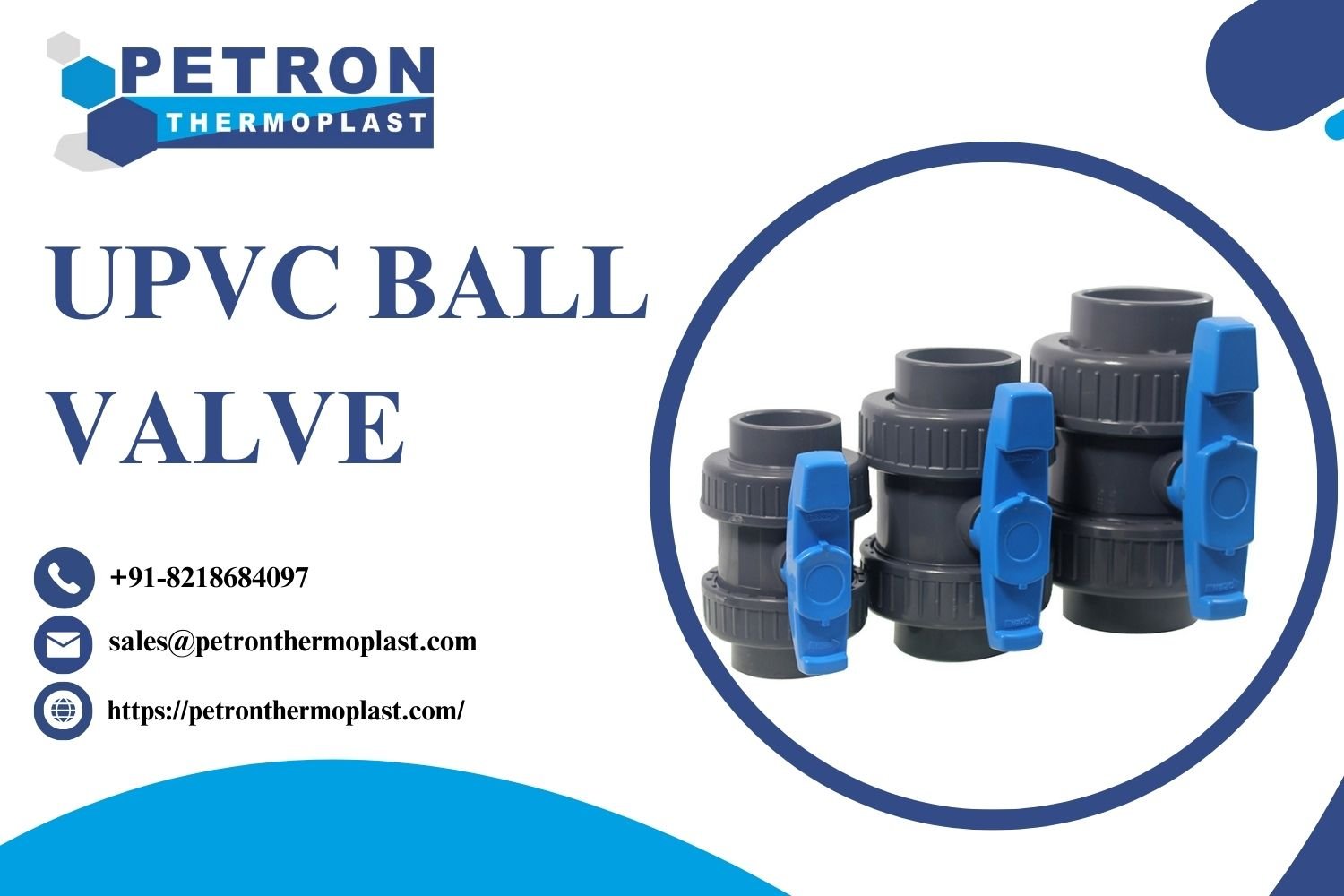
In an era of rapid industrial transformation, businesses are prioritizing reliability, cost efficiency, and corrosion resistance in their fluid control systems. One of the standout beneficiaries of this shift is the UPVC (Unplasticized Polyvinyl Chloride) ball valve — a versatile, durable, and cost-effective solution widely used across chemical, water, wastewater, power, and process industries.
With increasing demand from evolving industrial markets, UPVC ball valves are no longer just an alternative to traditional metal valves — they are increasingly the preferred choice for critical applications. This blog explores the key market trends driving this adoption, the value UPVC ball valves bring to modern industrial systems, and why decision-makers trust them for large-scale and continuous operations.
- Increasing Focus on Corrosion Resistance and Chemical Stability
One of the foremost reasons industries are switching to UPVC ball valves is their superior resistance to corrosion and chemical attack. Traditional metal valves like carbon steel and cast iron are vulnerable to rusting and corrosion when exposed to aggressive chemicals, acids, or saline environments. In contrast, UPVC delivers:
- Exceptional resistance to acids, alkalis, and salt solutions
- Zero corrosion in water treatment and chemical dosing lines
- Long-term performance without degradation
This trend is especially visible in chemical processing plants, water treatment facilities, and effluent systems, where fluid lines often carry corrosive media. UPVC ball valves minimize leakage risks, maintenance costs, and the likelihood of premature valve failure.
- Rising Demand in Water and Wastewater Treatment
Global initiatives to improve clean water access and wastewater management have led to accelerated investments in water infrastructure. Government programs, environmental regulations, and urban expansion have created a surge in water and wastewater treatment projects, which require highly reliable valve solutions.
UPVC ball valves are increasingly specified in:
- Water distribution systems
- Filtration and backwash lines
- Chemical dosing and pH adjustment processes
- Effluent discharge systems
Their non-corrosive nature, ease of installation, and low maintenance requirements make them ideal for both potable and industrial water applications.
- Shift Toward Thermoplastic Valves for Cost Efficiency
Industrial operators are constantly seeking ways to reduce both capex (capital expenditure) and opex (operational expenditure). Stainless steel and other metal valves may offer strength, but their cost — both upfront and in maintenance — can be prohibitive.
UPVC ball valves provide significant cost advantages:
Lower Manufacturing Cost
UPVC material and injection molding processes are less expensive than precision machining required for metal valves.
Reduced Installation Expense
Lightweight design simplifies handling and reduces labor costs on site, especially in large-diameter piping systems.
Lower Lifecycle Costs
UPVC valves don’t corrode, require minimal servicing, and have a long service life, translating to lower total cost of ownership (TCO) over decades of operations.
This compelling cost-performance ratio is driving adoption, especially in projects with tight budget constraints and large scope.
- Growth in Chemical and Process Industries
The global chemical industry is expanding due to increased production of polymers, pharmaceuticals, specialty chemicals, and processing of acid/base solutions. These sectors require ball valves that can withstand aggressive chemical exposure without compromising performance.
UPVC ball valves are preferred in:
- Acid and alkali transfer lines
- Chemical dosing circuits
- Process control systems
- Specialty chemical storage and transport
The ability of UPVC to retain its mechanical integrity in such environments — without the risk of corrosion or pitting — has made it the go-to material for chemical service valves.
- Compatibility with Automated and Smart Systems
Another emerging trend is the integration of automation and IoT-enabled process controls. Modern industrial valves are increasingly expected to work seamlessly with actuators, remote monitoring systems, and automated control protocols.
UPVC ball valves can be easily adapted for:
- Pneumatic actuation
- Electric actuation
- Smart control interfaces
- Remote operation in SCADA systems
This compatibility enables industries to boost operational efficiency, reduce manual intervention, and optimize process control in real time, aligning with smart factory initiatives and digital transformation strategies.
- Environmental and Regulatory Compliance
Stringent environmental regulations in many regions are pushing industries to adopt systems that reduce leakage and chemical spillage risk. Non-metallic valves such as UPVC ball valves play a role in this compliance framework due to their:
- Corrosion-free performance
- Reduced risk of material contamination
- Ability to handle aggressive fluids safely
- Easier recyclability at end of life
Industries such as pharmaceutical, food & beverage, and water utilities are using UPVC valves not only for performance but to align with environmental and public health regulations.
- Surge in EPC and Infrastructure Projects
Engineering, Procurement, and Construction (EPC) contractors are major drivers of industrial valve demand. With large-scale infrastructure developments underway across regions such as Asia Pacific, the Middle East, and Africa, the need for reliable, standardized, and easy-to-install valve solutions has grown significantly.
UPVC ball valves fit this need perfectly due to:
- Modular design
- Quick installation
- Standardized sizes
- Lower weight for logistics efficiency
This trend is particularly strong in large chemical plants, water treatment facilities, power plants, and municipal infrastructure projects.
- Preference for Modular and Retrofit-Friendly Solutions
Many industries are retrofitting existing piping systems to enhance performance without complete overhauls. UPVC ball valves are ideal in such scenarios due to their:
- Compatibility with standard pipe sizes
- Ease of replacement
- Minimal need for welding or heavy tools
- Quick fit-and-play installation
This makes them attractive for both new installations and upgrades of legacy systems.
- Rising Awareness of Safety and Operational Risks
Industrial decision-makers are increasingly aware of the risks associated with valve failures — including leaks, downtime, and environmental impacts. As a result, there’s a growing preference for components that combine safety with long-term reliability.
UPVC ball valves, with their:
- Leak-proof sealing
- Corrosion-resistant construction
- Low maintenance burden
- Predictable service life
are being specified in more critical applications than ever before.
- Global Supply Chain Resilience and Localization
In response to global challenges such as logistics disruptions, trade restrictions, and raw material volatility, industries are diversifying their supply chains. UPVC ball valves benefit from:
- Readily available raw materials
- Scalable local manufacturing
- Shorter lead times compared to alloy or specialty metal valves
This trend supports global industrial expansion with locally sourced, reliable valve solutions.
Conclusion
The market adoption of UPVC ball valves is being driven by a combination of strategic, economic, and operational trends. From corrosion resistance and cost effectiveness to automation compatibility and regulatory compliance, these valves are changing how industries approach reliable flow control.
As industrial systems evolve toward smarter, safer, and more resilient operations, UPVC ball valves are emerging as a go-to choice for EPC contractors, plant engineers, and industrial procurement specialists. With strong supplier partnerships, such as those offered by Petron Thermoplast, businesses can tap into high-performance valve solutions engineered for today’s demanding industrial environments.