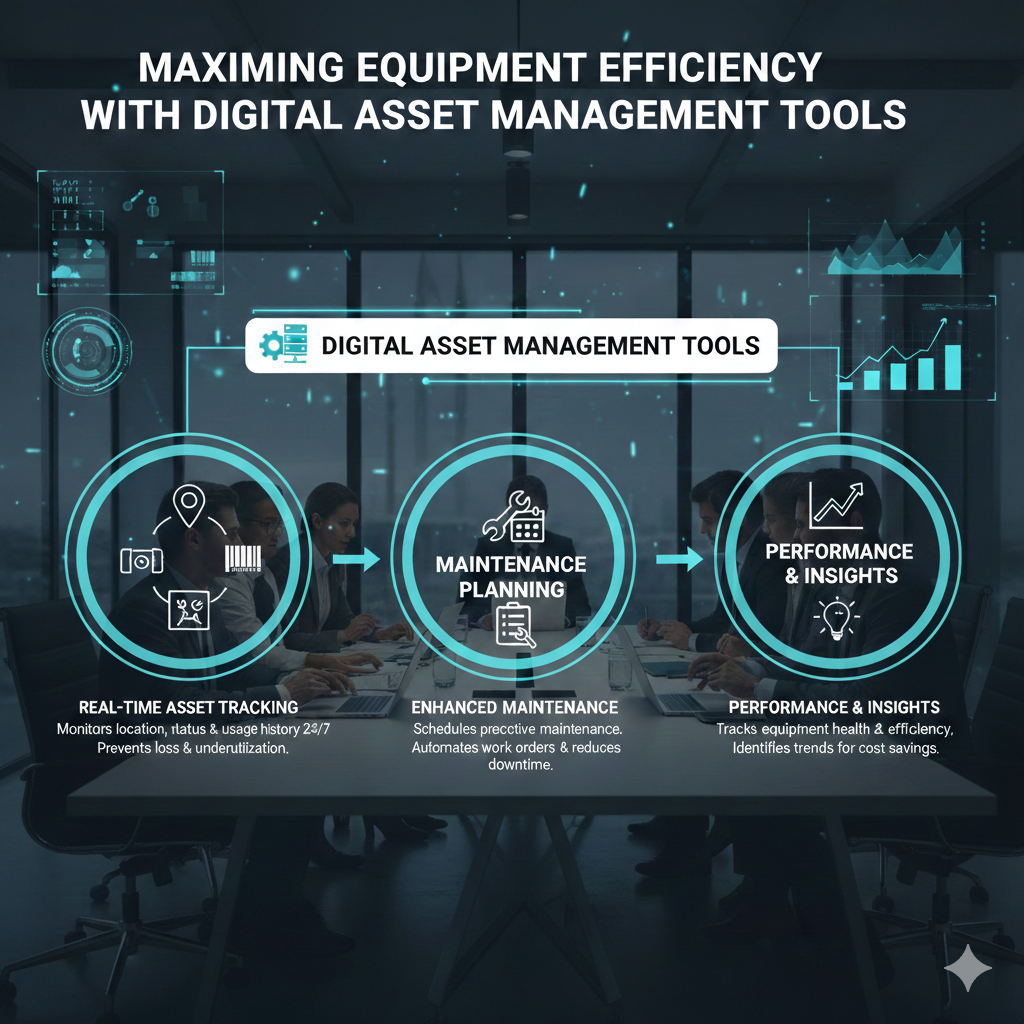
Efficiently managing construction equipment is crucial for maintaining a successful operation. With the increasing complexity of projects and the need for cost-effective solutions, construction companies are increasingly turning to digital asset management tools to enhance the efficiency of their equipment. These tools, especially when combined with construction asset tracking software, allow for real-time monitoring, predictive maintenance, and seamless integration across multiple job sites.
This article explores how digital asset management tools and asset tracking software can revolutionize construction equipment management, maximize efficiency, and minimize costs.
The Challenges of Managing Construction Equipment
Managing construction equipment across various sites can be an overwhelming task. Construction companies typically operate large fleets of equipment with diverse models and needs. The key challenges in managing these assets effectively include:
- Tracking Equipment Location: Construction projects often span multiple job sites, making it difficult to know the exact location of every piece of equipment.
- Maintaining Equipment Utilization: Ensuring that equipment is being used efficiently across sites is challenging without centralized tracking.
- Preventive Maintenance: Timely maintenance is crucial to avoid equipment failures, but managing maintenance schedules without proper tools is cumbersome.
- Avoiding Downtime: Unexpected breakdowns can lead to costly delays, and without real-time data, planning for maintenance becomes reactive rather than proactive.
Digital asset management tools and construction asset tracking software offer solutions to these challenges by providing a comprehensive view of asset usage, location, and condition, allowing for better-informed decisions.
How Digital Asset Management Tools Improve Equipment Efficiency
Digital asset management tools, when integrated with construction asset tracking software, provide a powerful solution for enhancing equipment efficiency. These tools offer several features that can streamline operations, reduce inefficiencies, and improve overall productivity.
1. Real-Time Tracking and Location Monitoring
With GPS-enabled tracking systems, construction companies can track the real-time location of each piece of equipment. This eliminates the uncertainty of not knowing where equipment is located, especially when multiple sites are involved. Managers can access the exact position of assets at any time through a centralized platform, making it easier to coordinate equipment use across job sites and move it efficiently where it is needed most.
Having a digital record of equipment locations also helps ensure that assets are not left idle, minimizing downtime and optimizing asset utilization.
2. Improved Equipment Utilization
Effective utilization of construction equipment is essential for maximizing ROI. Digital asset management tools provide insights into how often each piece of equipment is used, the hours it operates, and when it is idle. This data helps construction managers understand which assets are being underused or overused, allowing them to redistribute equipment as needed to optimize efficiency.
Moreover, these tools can facilitate scheduling and dispatch, ensuring that machinery is available when and where it’s needed. Proper allocation of equipment across multiple job sites reduces wasted resources and boosts productivity.
3. Predictive Maintenance and Reduced Downtime
One of the most significant benefits of digital asset management tools is predictive maintenance. By integrating real-time data from equipment sensors with asset tracking software, construction companies can predict when a piece of equipment is likely to need maintenance or repairs. This prevents sudden breakdowns and allows for scheduled maintenance during non-peak hours.
For instance, asset tracking software can track usage patterns, such as the number of hours a machine has been operating, and trigger alerts when it’s time for routine service or parts replacement. This proactive approach to maintenance reduces costly downtime and extends the life of the equipment.
4. Centralized Data and Reporting
With digital asset management tools, all equipment-related data is stored in one centralized system. This includes not only location and usage information but also maintenance history, fuel consumption, and performance data. Construction managers can easily access this information from any device, improving decision-making processes.
Data analytics further enhances the value of this information by providing insights into performance trends, helping managers identify potential inefficiencies or issues early. For example, equipment that frequently requires repairs might indicate a need for replacement or a change in usage patterns.
5. Enhanced Asset Security
Construction sites can be targets for theft, especially for valuable equipment and machinery. Digital asset management tools equipped with GPS tracking features help reduce the risk of theft by allowing managers to monitor equipment movements. If equipment is moved outside a designated area or used outside of specified hours, the system can send real-time alerts to managers.
In addition, if equipment is stolen, GPS tracking can help recover the stolen items quickly, minimizing financial losses.
6. Comprehensive Compliance Management
Construction projects must comply with various safety, regulatory, and environmental standards. Digital asset management tools help ensure that equipment is up to date with compliance requirements by tracking inspections, certifications, and maintenance schedules. If a piece of equipment is due for an inspection or needs to meet a specific standard, the system can notify managers in advance, preventing penalties for non-compliance.
This feature streamlines the audit process and ensures that the company adheres to safety regulations without having to manually track each asset’s compliance status.
The Future of Equipment Management in Construction
As the construction industry continues to evolve, the role of digital asset management tools and asset tracking software becomes increasingly important. The ability to remotely monitor and manage assets, integrate data analytics, and predict maintenance needs will continue to shape the future of construction equipment management.
Furthermore, as automation and artificial intelligence become more prevalent in the industry, digital asset management tools will continue to evolve, offering even more advanced capabilities. For example, AI-driven software could automatically adjust equipment usage based on project requirements, reducing inefficiencies even further.
As construction companies embrace these technologies, they will not only improve equipment utilization but also enhance overall project management, reducing costs, and increasing the speed of project completion.
Conclusion
Maximizing equipment efficiency is crucial for maintaining profitability in the construction industry. Digital asset management tools, particularly when integrated with construction asset tracking software, provide the necessary tools to streamline equipment operations, reduce downtime, and optimize the use of resources. By offering real-time tracking, predictive maintenance, and centralized data management, these systems help construction companies stay competitive in an increasingly complex market.
Investing in construction equipment tracking software and asset management systems enables companies to proactively address operational challenges, improve asset security, and enhance productivity. As the industry moves toward more digital solutions, these tools will be essential for managing equipment more effectively and ensuring smoother, more cost-effective construction operations.