
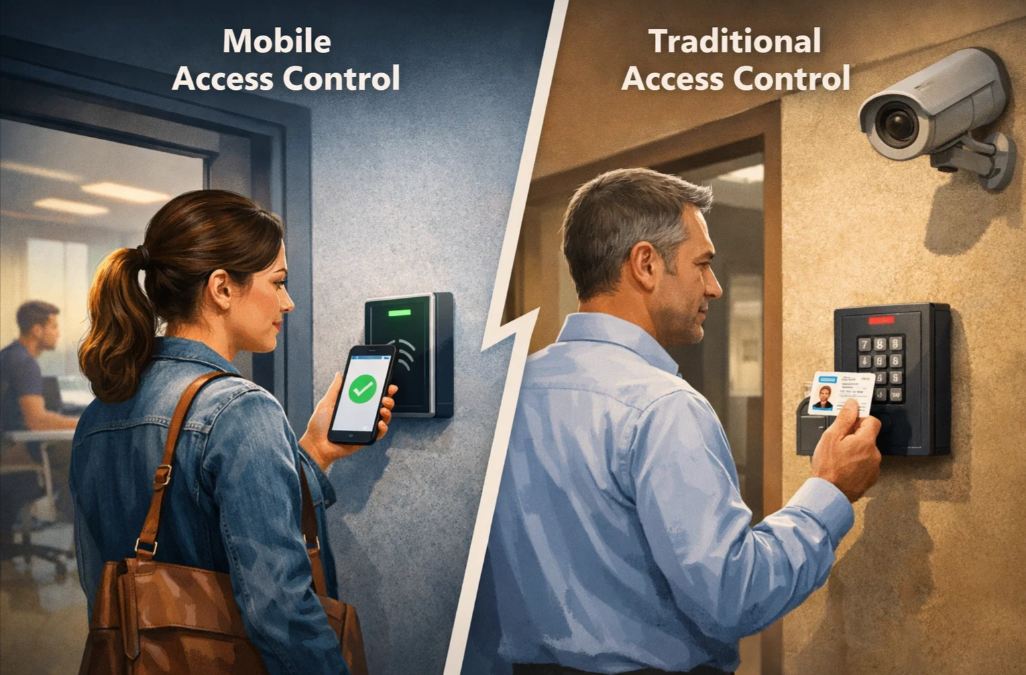
Security has always been a fundamental concern for businesses, institutions, and organizations of every size. From protecting physical assets and sensitive data to ensuring employee safety and regulatory compliance, access control plays a vital role in modern operations. However, as technology evolves and workplaces become more dynamic, traditional access control methods are increasingly showing their limitations.
Enter the Mobile Access Control System—a smarter, more flexible, and future-ready approach to security. This article explores the key differences between traditional access control and mobile-based systems, examining how each works, where they fall short, and why mobile access control is rapidly becoming the preferred choice for modern businesses.
Understanding Traditional Access Control Systems
Traditional access control systems have been the backbone of physical security for decades. These systems typically rely on physical credentials and on-site infrastructure to regulate who can enter specific areas.
Common Types of Traditional Access Control
Traditional systems generally include:
- Mechanical keys
- Key cards or proximity cards
- PIN-based keypads
- On-premises control panels and servers
Access permissions are often assigned manually, and changes require physical intervention, such as reissuing cards or replacing locks.
Strengths of Traditional Access Control
For many years, traditional systems were effective because they:
- Provided basic security and access restriction
- Were easy to understand and operate
- Required minimal training for end users
- Worked independently without internet connectivity
Despite these advantages, traditional access control was designed for static environments—something modern workplaces no longer are.
Limitations of Traditional Access Control Systems
As organizations scale and security needs grow more complex, traditional access control systems struggle to keep up.
Lack of Flexibility
One of the biggest challenges is inflexibility. Managing access across multiple locations or departments often requires physical updates to hardware or manual credential changes.
High Administrative Overhead
Lost key cards, forgotten PINs, and employee turnover create ongoing administrative tasks. Replacing credentials and updating access rights consumes time and resources.
Limited Visibility and Reporting
Traditional systems often provide limited real-time insights. Security teams may only review access logs after an incident occurs, reducing the ability to respond proactively.
Scalability Challenges
Expanding a traditional system usually means installing new hardware, servers, and wiring—making it costly and time-consuming.
What Is a Mobile Access Control System?
A Mobile Access Control System replaces or complements physical credentials with secure digital access delivered through smartphones, tablets, or wearable devices. Instead of carrying cards or keys, users authenticate themselves using mobile credentials.
These systems are typically powered by Advanced access control software and often operate through a Cloud based access control system, allowing centralized management and remote oversight.
Key Components of a Mobile Access Control System
Modern mobile access control solutions include:
- Mobile credentials stored securely on smartphones
- Bluetooth, NFC, or QR-based authentication
- Cloud-hosted access management platforms
- Real-time monitoring and analytics
- Integration with other security systems such as video surveillance
This digital-first approach transforms access control from a static tool into a dynamic security ecosystem.
Comparing Mobile and Traditional Access Control Systems
To understand why mobile access control is gaining momentum, it’s essential to compare both systems across key operational areas.
Credential Management
Traditional Access Control:
Uses physical cards or keys that can be lost, stolen, or duplicated. Reissuing credentials requires physical distribution.
Mobile Access Control System:
Digital credentials are issued instantly and can be revoked or modified remotely. Smartphones are harder to lose and easier to secure with biometrics.
Winner: Mobile Access Control System
Security Level
Traditional Access Control:
Limited authentication options. Cards and PINs can be shared, cloned, or compromised.
Mobile Access Control System:
Supports multi-factor authentication, biometric verification, and encrypted credentials, delivering advanced access control software for better security & efficiency.
Winner: Mobile Access Control System
Scalability
Traditional Access Control:
Scaling requires new hardware installations and infrastructure upgrades.
Mobile Access Control System:
Cloud-based architecture allows businesses to add users, locations, and permissions instantly without major hardware changes.
Winner: Mobile Access Control System
Administrative Efficiency
Traditional Access Control:
Manual processes dominate—especially during onboarding, offboarding, or role changes.
Mobile Access Control System:
Centralized dashboards enable instant updates, automated workflows, and real-time alerts.
Winner: Mobile Access Control System
User Experience
Traditional Access Control:
Users must carry physical credentials and remember PINs.
Mobile Access Control System:
Employees use devices they already carry, improving convenience and adoption.
Winner: Mobile Access Control System
The Role of Cloud Technology in Mobile Access Control
A major differentiator between modern and traditional systems is the use of cloud technology. A Cloud based access control system allows organizations to manage access across all locations from a single interface.
Benefits of Cloud-Based Access Control
- Remote system management
- Automatic software updates
- High availability and redundancy
- Lower infrastructure and maintenance costs
- Secure data backup and recovery
Cloud connectivity transforms access control from a localized system into a scalable enterprise solution.
Advanced Access Control Software: The Intelligence Behind Mobile Systems
At the core of every mobile access control solution lies Advanced access control software. This software enables intelligent decision-making, automation, and system integration.
Key Capabilities
- Role-based and time-based access policies
- Real-time activity tracking
- Integration with HR, IT, and security platforms
- Detailed audit trails and compliance reporting
These capabilities allow organizations to move from reactive security to proactive risk management.
Security and Efficiency Go Hand in Hand
Modern businesses demand solutions that enhance both security and operational efficiency. Mobile access control delivers on both fronts.
Advanced Access Control Software for Better Security & Efficiency
By automating access management and reducing manual processes, organizations can:
- Minimize human error
- Reduce administrative costs
- Improve compliance and reporting
- Enhance employee productivity
Security teams gain better visibility while employees enjoy seamless access—creating a win-win scenario.
Mobile Access Control in a Post-Pandemic Workplace
The shift toward hybrid work models has accelerated the adoption of mobile access control. Organizations now require systems that support flexible schedules, temporary access, and remote management.
Mobile access control systems enable:
- Contactless entry for improved hygiene
- Temporary credentials for visitors and contractors
- Dynamic access rules for rotating work schedules
Traditional systems, designed for fixed environments, struggle to meet these new demands.
The Millennium Perspective on Modern Access Control
Forward-thinking security providers like Millennium emphasize innovation, adaptability, and long-term value in access control solutions.
The Millennium approach focuses on:
- Cloud-first architectures
- Seamless mobile integration
- Scalable and future-ready platforms
- User-centric design
By aligning access control with digital transformation goals, Millennium-inspired solutions help organizations stay secure while remaining agile.
Cost Considerations: Short-Term vs Long-Term Value
While traditional access control systems may appear less expensive initially, long-term costs tell a different story.
Traditional Systems
- Hardware replacement and maintenance
- Card reissuance costs
- Limited upgrade paths
Mobile Access Control Systems
- Lower credential replacement costs
- Reduced infrastructure dependency
- Continuous feature enhancements via software updates
Over time, mobile access control delivers greater return on investment through efficiency and scalability.
Compliance, Auditing, and Data Protection
Regulatory compliance is a growing concern across industries. Mobile access control systems provide detailed logs, reports, and audit trails that simplify compliance with security and data protection regulations.
Advanced access control software ensures that access policies align with organizational and legal requirements, reducing risk and improving accountability.
The Future of Access Control Systems
As technology advances, access control systems will continue to evolve. Future developments are expected to include:
- Deeper integration with AI and IoT
- Enhanced biometric authentication
- Predictive security analytics
- Greater reliance on cloud-based platforms
Mobile access control is not just a trend—it is the foundation of future-ready security.
Why Mobile Access Control Is the Better Choice
After comparing both approaches, the advantages of mobile access control are clear:
- Higher security through encryption and biometrics
- Greater flexibility and scalability
- Improved administrative efficiency
- Enhanced user experience
- Strong alignment with cloud and digital transformation strategies
For modern businesses, mobile access control is no longer optional—it is essential.
Conclusion
The difference between traditional access control and a Mobile Access Control System goes far beyond convenience. It represents a fundamental shift in how organizations think about security, efficiency, and adaptability.
While traditional systems served their purpose in the past, they are increasingly unable to meet the demands of today’s dynamic environments. Mobile access control, powered by Advanced access control software and a Cloud based access control system, delivers stronger security, better efficiency, and future-ready scalability.
Guided by innovation-driven approaches such as those championed by Millennium, businesses can move confidently toward smarter, safer, and more efficient access control solutions. In the modern security landscape, mobile access control is not just the better option—it is the smarter one.
