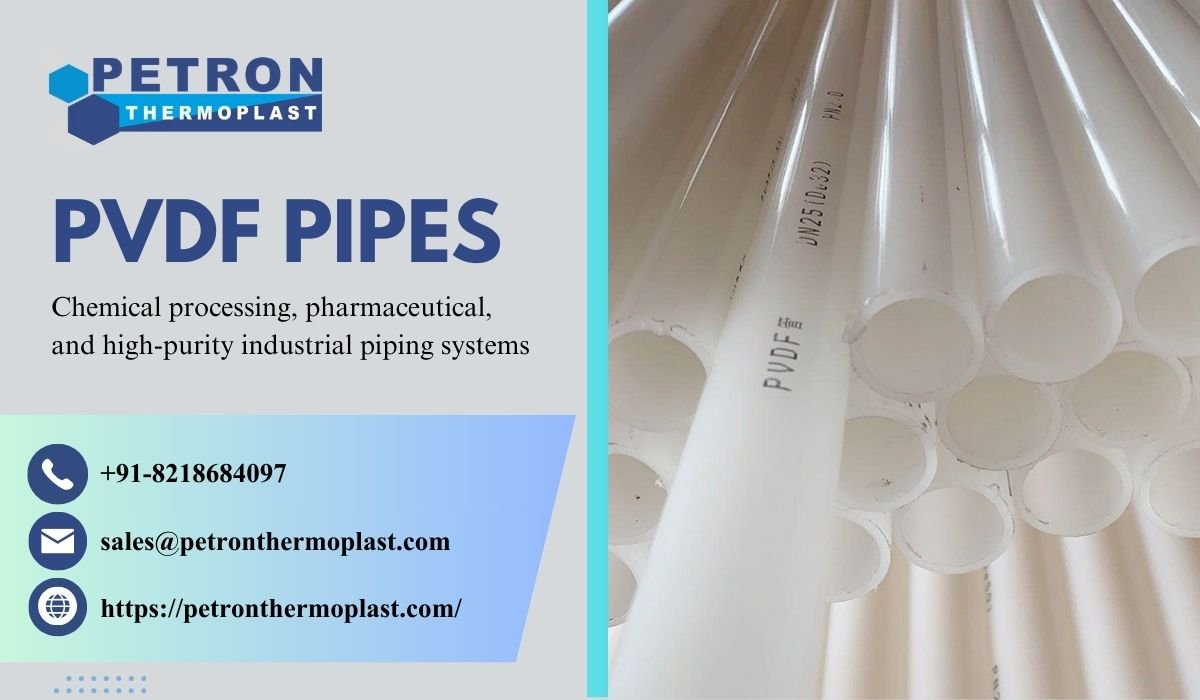
Handling fluorinated chemicals and strong acids is one of the most demanding challenges in industrial piping design. These media are highly aggressive, chemically reactive, and capable of degrading conventional piping materials in a short time. Industries such as chemical processing, pharmaceuticals, semiconductors, battery manufacturing, and specialty chemicals require piping systems that offer unmatched chemical resistance, long service life, and absolute process safety.
This is where PVDF (Polyvinylidene Fluoride) pipes have emerged as the preferred solution. Known for their exceptional resistance to fluorinated compounds, strong acids, and high-purity fluids, PVDF pipes provide a reliable, long-term alternative to metal and standard plastic piping materials.
In this blog, we explore why PVDF pipes are ideally suited for fluorinated chemicals and strong acids, their advantages over traditional materials, and how they support safe and efficient industrial operations.
The Challenge of Handling Fluorinated Chemicals and Strong Acids
Fluorinated chemicals and strong acids such as hydrofluoric acid (HF), sulfuric acid, nitric acid, hydrochloric acid, and phosphoric acid pose severe risks to piping systems. Common challenges include:
- Rapid corrosion of metal pipes
- Stress cracking and degradation in standard plastics
- Contamination of high-purity processes
- Frequent maintenance and unplanned shutdowns
- Safety hazards due to leaks and material failure
Selecting the wrong piping material can lead to equipment damage, environmental risks, and costly downtime. This makes material selection a critical engineering decision.
What Makes PVDF Pipes Unique?
PVDF is a high-performance fluoropolymer known for its unique combination of chemical resistance, mechanical strength, and thermal stability. Unlike metals and conventional plastics, PVDF remains stable even when exposed to highly aggressive fluorinated compounds and strong acids.
Key characteristics of PVDF include:
- Excellent resistance to acids, alkalis, and solvents
- High purity and non-contaminating properties
- High temperature tolerance
- Strong mechanical strength
- Long service life in harsh environments
These properties make PVDF pipes a preferred choice for critical and corrosive industrial applications.
Superior Chemical Resistance to Fluorinated Compounds
One of the primary reasons PVDF pipes are used in fluorinated chemical applications is their exceptional chemical inertness. PVDF resists attack from:
- Fluorinated solvents
- Hydrofluoric acid (in controlled concentrations)
- Chlorine and halogenated chemicals
- Strong oxidizing agents
Metal pipes, including stainless steel and high-alloy steels, often fail in such environments due to pitting, stress corrosion cracking, or chemical attack. PVDF pipes, on the other hand, maintain their structural integrity and performance over extended periods.
Excellent Performance with Strong Acids
PVDF pipes perform exceptionally well when handling strong inorganic acids, including:
- Sulfuric acid
- Hydrochloric acid
- Nitric acid
- Phosphoric acid
Their non-reactive nature prevents corrosion, scaling, and contamination. This makes PVDF ideal for acid transfer lines, storage connections, dosing systems, and recovery processes.
High Temperature Stability in Aggressive Environments
Many acid-handling processes operate at elevated temperatures. PVDF pipes are capable of continuous operation at temperatures up to 120°C, depending on pressure and system design. This temperature resistance allows PVDF piping systems to be used in:
- Hot acid circulation lines
- High-temperature chemical reactions
- Thermal cleaning processes
Unlike standard thermoplastics, PVDF retains its mechanical strength and chemical resistance even under thermal stress.
High Purity for Sensitive Processes
In industries such as pharmaceuticals, semiconductors, and specialty chemicals, product purity is critical. PVDF pipes offer:
- Non-leaching material properties
- Smooth internal surfaces
- Minimal risk of contamination
This makes them ideal for high-purity chemical handling, where even trace contamination can affect product quality.
Lightweight Yet Mechanically Strong
Despite their high performance, PVDF pipes are significantly lighter than metal pipes. This provides advantages such as:
- Easier handling and installation
- Reduced support structure requirements
- Lower transportation and installation costs
At the same time, PVDF offers excellent mechanical strength and impact resistance, ensuring reliable performance in industrial environments.
Low Maintenance and Long Service Life
One of the biggest advantages of PVDF piping systems is their low maintenance requirement. Since PVDF does not corrode, pit, or scale, it eliminates common maintenance issues associated with metal pipes.
Benefits include:
- Fewer inspections
- Reduced downtime
- Lower replacement frequency
- Improved operational efficiency
For continuous industrial operations, this translates into significant cost savings over the lifecycle of the system.
PVDF Pipes vs Metal Pipes for Acid and Fluorinated Chemicals
| Parameter | PVDF Pipes | Metal Pipes |
| Chemical Resistance | Excellent | Limited |
| Corrosion Risk | None | High |
| Weight | Lightweight | Heavy |
| Maintenance | Low | High |
| Service Life | Long | Limited |
| Contamination Risk | Very Low | Moderate |
This comparison clearly shows why PVDF pipes outperform metal pipes in corrosive and high-purity applications.
Applications of PVDF Pipes in Fluorinated and Acid Systems
PVDF pipes are widely used in industries where aggressive chemicals are handled daily, including:
- Fluorochemical manufacturing
- Acid recovery and recycling systems
- Semiconductor fabrication plants
- Battery and EV material processing
- Chemical processing plants
- Pharmaceutical production facilities
- Effluent treatment and waste acid handling
Their versatility makes them suitable for both primary process lines and auxiliary piping systems.
Why Choose PVDF Pipes from Petron Thermoplast?
At Petron Thermoplast, we supply industrial-grade PVDF pipes engineered to meet the demands of highly corrosive and critical applications. Our PVDF piping solutions offer:
- Consistent quality and dimensional accuracy
- Compatibility with PVDF fittings and valves
- Support for EPC, OEM, and bulk project requirements
- Export-grade standards and reliable supply
We work closely with project engineers to ensure the right material selection for long-term performance.
Conclusion
When it comes to handling fluorinated chemicals and strong acids, material selection directly impacts safety, efficiency, and operating cost. PVDF pipes by Petron Thermoplast provide unmatched chemical resistance, thermal stability, and purity, making them the ideal choice for the most aggressive industrial environments.
For industries seeking long-lasting, corrosion-free, and low-maintenance piping solutions, PVDF pipes offer a future-ready alternative to metal and conventional plastic pipes.