
You remember the thrill of racing miniature cars on electrified tracks. The smell of rubber. The sound of tiny motors screaming. The competitive rush as your 1/32 scale Porsche overtook your friend’s Corvette. For most people, slot car racing lives only in childhood memories. Finding authentic pieces from that golden era feels nearly impossible. Most vintage slot cars sit in private collections, locked away from enthusiasts who want to see, study, and appreciate them. Scott Bader Los Angeles changes everything. His museum houses the world’s most comprehensive archive of 1960s slot car history.
The Golden Age Nobody Preserved
The slot car boom lasted just four years. Between 1963 and 1967, America went crazy for miniature racing. Manufacturers produced thousands of models. Kids packed into indoor raceways every weekend. Then the craze vanished almost overnight.
Most of those cars ended up in landfills. The ones that survived got played with until they broke. Original packaging disappeared first. Instructions got lost. Rare parts became impossible to find.
Your chance to see intact examples from this era seemed gone forever. Museums focused on full-size automobiles. Private collectors kept their treasures hidden. The slot car hobby became an orphaned piece of automotive history.
West Hollywood Becomes Slot Car Central
One person decided to fix this problem. He grew up riding his bicycle to the Revell Raceway near Los Angeles. That childhood passion never died. After building a successful career as CEO of a national distribution company, he returned to his first love.
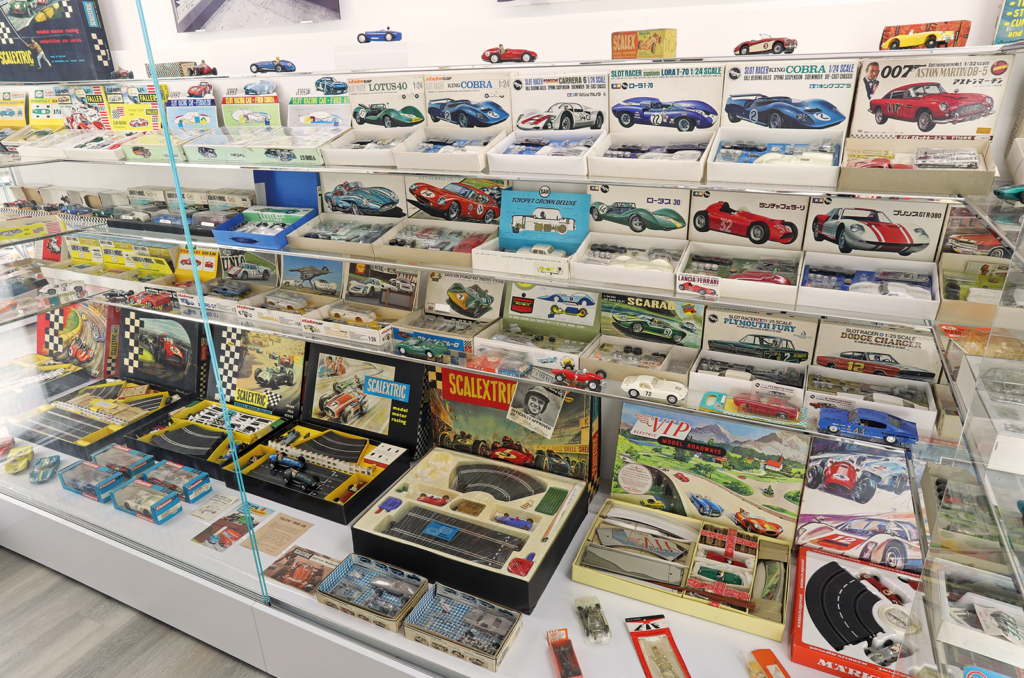
The result sits just above Sunset Strip in West Hollywood. The facility opened its doors in 2014 after years of planning and construction. It holds thousands of slot cars from the classic era. Many remain sealed in their original boxes, untouched since the 1960s.
This collection goes beyond simple nostalgia. Every piece gets cataloged, authenticated, and preserved using museum-grade standards. Expert curators inspect each item for condition and historical significance. The archive serves as a research resource for serious collectors worldwide.
Inside the World’s Largest Archive
Your visit starts before you even enter the display room. Twelve glass monitors create video montages of vintage racing footage. Music from the 1960s plays through hidden speakers. The heating system even pumps in the distinctive smell of oil of wintergreen. Race car drivers used this tire additive back then.
The main gallery features custom-built glass cases. They protect thousands of slot cars while letting you examine every detail. You see factory-built models alongside hand-crafted racing machines. Rare prototype kits sit next to mass-produced favorites. Original artwork and vintage comic books fill the gaps.
A separate storage area contains five full aisles of file drawers. Each drawer holds carefully organized parts, accessories, and additional cars. An underground vault accessible by elevator stores boxes of unopened slot cars. Some packages have never been touched since leaving the factory floor.
What Makes This Collection Different
Most museums show you what you cannot touch. This archive takes a different approach. The curator wants you to understand how these machines worked. Display cards explain racing techniques from the 1960s. Technical details help you appreciate the engineering behind each model.
You learn about chassis design improvements. Motor technology evolution becomes clear. The difference between early commercial models and later competition-grade cars makes sense. This educational focus separates serious archives from simple collections.
The scope covers every major manufacturer from the golden age. You find models in scales from 1/24 to 1/32. Complete racing sets sit alongside individual cars. Literature, catalogs, and promotional materials document the entire industry. Nothing comparable exists anywhere else in the world.
Getting Through the Doors
Here comes the challenge. The museum opens only a handful of times each year. Access requires winning a lottery or securing an appointment. Limited visiting slots protect the collection and maintain the intimate experience.
Your window to see this archive stays small. Demand exceeds available appointments by a wide margin. Planning ahead becomes essential. The website announces upcoming open dates months in advance. Serious enthusiasts mark their calendars immediately.
This scarcity serves a purpose. Mass tourism would damage delicate vintage items. Controlled access preserves everything for future generations. You get quality time with the collection instead of fighting crowds.
Beyond the Museum Walls
The same passion drives a retail operation in El Segundo. Electric Dreams slot car store opened in 1992. It stocks new racing products alongside vintage treasures. The inventory includes current models from major manufacturers.
You also find hard-to-locate parts for restoration projects. The staff knows slot car history inside and out. They help you identify mystery pieces and track down specific components. This store serves as a living extension of the museum’s mission.
Both locations work together. The museum preserves history. The store keeps the hobby alive today. You get access to knowledge accumulated over decades of collecting and racing.
The Man Behind the Vision
Building this archive required more than money. It demanded lifetime dedication to a childhood passion. Growing up during the slot car boom created lasting memories. Racing at local dragstrips in a 1969 Camaro came later. Professional racing in IMSA followed.
The business career funded everything else. Running a national distribution company for forty years created financial freedom. That allowed a return to first loves during semi-retirement after 2000. The museum represents the culmination of careful planning and patient collecting.
Recognition came from the community. Selection to the Model Car Hall of Fame committee confirmed his expertise. Fellow collectors call him a patron saint of the hobby. His work helps countless people relive cherished memories.
FAQs
How often does the LA slot car museum open to visitors?
The museum opens only a few times annually by appointment or lottery. Check the official website for scheduled open dates and reservation information.
What time period does the collection focus on?
The archive concentrates on the 1963-1967 classic era, though it includes items from the broader 1960s to early 1970s golden age of slot car racing.
Can I bring slot cars for authentication or appraisal?
Contact the museum directly about authentication services. The expert curators can help identify and evaluate vintage pieces.
Does the museum allow photography inside?
Photography policies vary by visit type. Ask about current rules when booking your appointment to avoid disappointment.
Where can I buy vintage slot car parts in Los Angeles?
Electric Dreams in El Segundo maintains extensive inventory of both new and vintage slot car parts, accessories, and complete models.
Your Next Move Matters
Slot car history disappears a little more each year. Vintage pieces get thrown away. Knowledge dies with older collectors. Original packaging disintegrates in dusty garages. This archive fights that loss.
Your visit supports preservation work. Every appointment booked tells the world this history matters. Young people discover the hobby through these tours. The cycle continues.
Scott Bader created something rare in Los Angeles a true museum dedicated to preserving automotive miniature racing heritage. His collection offers you direct access to pieces you will never find elsewhere. The experience connects you with the golden age of slot cars in ways no book or website can match. Visit us before another year passes. The lottery opens soon. Your appointment could change how you see this forgotten chapter of American car culture.