
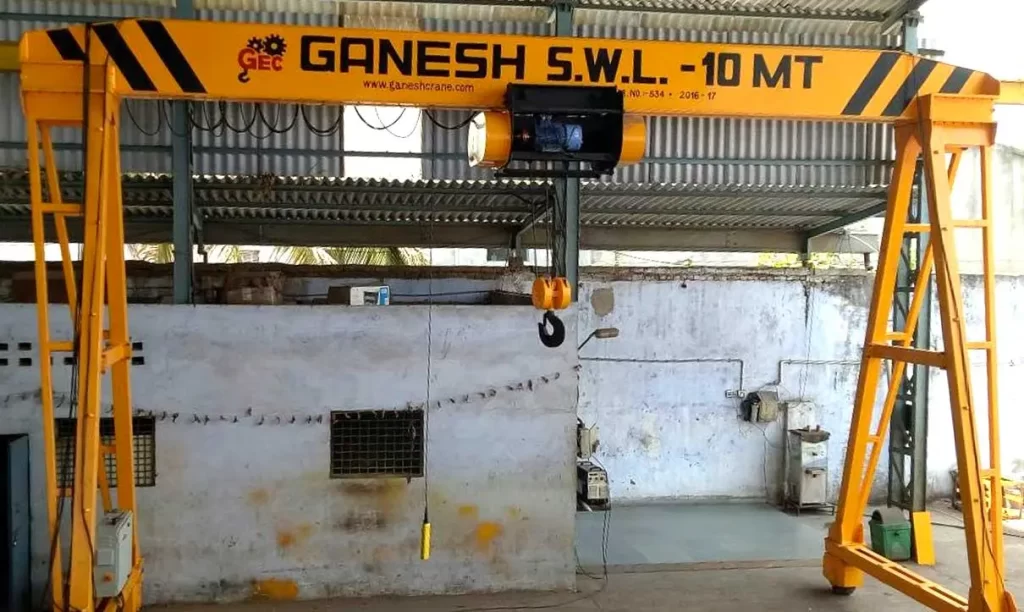
If you deal with lifting work, you already know one thing: doing it by hand takes time and is not safe. You need something that can lift properly and move things without slowing your work down. That’s where a Single Girder Gantry Crane comes in. It’s a simple setup. It helps you lift and shift material from one place to another without needing a full crane system. Many small and medium-sized industries use it because it’s practical and doesn’t cost too much. But one thing is important: if you choose the wrong crane, it can create more problems than it solves. So it’s better to understand it first.
What is a Single Girder Gantry Crane?
In simple words, a Single Girder Gantry Crane is a crane that stands on its own legs and moves on the ground.
- It has one beam on top
- A hoist runs on that beam
- The crane moves on wheels or rails
You don’t need to fix it to the building, which makes it easy to use in different places.
Types of Single Girder Gantry Crane
Not all cranes are the same. The type depends on your work.
Full Gantry
- Two legs on both sides
- Runs on rails
- Good for outdoor and heavier work
Semi Gantry
- One side supported, one side on the ground
- Saves space
- Good for indoor use
Portable Gantry
- Comes with wheels
- Easy to move
- Good for light and flexible work
Adjustable Gantry
- Height can be changed
- Useful when work keeps changing
Where It Is Used
You’ll see a Single Girder Gantry Crane in places where lifting is part of daily work:
- Workshops
- Warehouses
- Small factories
- Construction sites
It’s used where people need a simple lifting solution without a big setup.
Why People Prefer It
There’s a simple reason: it makes work easier.
- Easy to install
- Costs less than bigger crane systems
- Can be used inside and outside
- Can be moved if needed
- Works well for medium loads
For many businesses, this is enough to handle daily work.
How to Choose the Right One
This is where people usually make mistakes. They don’t check their needs properly. Here’s what you should look for before choosing a Single Girder Gantry Crane:
Load Capacity
- Know how much weight you will lift
- Always keep a safety margin
Size
- Check the height and width of your space
- Make sure the crane fits properly
Usage
- Daily heavy use or occasional use
- Choose the build quality based on that
Movement
- Fixed or movable
- Pick what suits your work
Work Area
- Indoor or outdoor
- Weather and dust matter
If you check these points, you avoid problems later.
Mistakes to Avoid
Small mistakes can cause big problems later, especially in lifting work. Most issues don’t come from the Single Girder Gantry Crane itself, but from wrong decisions at the start.
- Choosing only based on price: A cheaper option may not handle your work properly and can lead to more repairs later
- Not checking load capacity: If the crane is not made for your load, it can become unsafe and unreliable
- Ignoring space: Not checking height and width can create problems during setup and daily use
- Buying the wrong type: Every job is different, so using the wrong type can slow down your work
- Not planning maintenance: If you don’t check the crane regularly, small issues can turn into bigger ones
In simple words, even a good Single Girder Gantry Crane will only work well if it matches your work and is used properly
Maintenance Tips
You don’t need any complex system to maintain a crane. In most cases, simple and regular checks are enough to keep things working properly. If you ignore small issues, they slowly turn into bigger problems and can stop your work completely. So it’s better to stay regular with basic maintenance.
- Check ropes and hooks regularly: These parts handle the actual load, so always see if there are cuts, bending, or wear. If anything looks weak, fix it early instead of waiting for failure
- Keep parts lubricated: Moving parts need proper lubrication to run smoothly. Without it, parts start wearing out faster and can create noise or friction
- Look for wear and damage: Do a quick visual check for cracks, rust, or loose nuts and bolts. These small signs usually show up before a bigger issue happens
- Don’t overload: Always lift within the given capacity. Overloading not only damages the crane but also creates safety risks for workers
- Follow a simple routine: You don’t need a complex schedule; just regular checking weekly or monthly, depending on usage, is enough
In simple words, taking a few minutes to check your crane regularly can save you from costly repairs and sudden breakdowns, and it keeps your work running without interruption.
Conclusion
At the end, a Single Girder Gantry Crane simply helps make lifting work easier and safer. When you choose the right one based on your work and space, it runs smoothly without creating problems. It also saves time and reduces manual effort. You don’t need anything complicated, just the right setup. A good crane from Ganesh Engineering Co. can help you handle daily work without stress and keep your operations running properly.
FAQs
Q1. What does a Single Girder Gantry Crane do?
It helps lift and move materials easily.
Q2. Is it easy to install?
Yes, it’s simple compared to other crane systems.
Q3. Can it be moved?
Yes, many types can be moved easily.
Q4. Is it good for small industries?
Yes, it works well for small and medium setups.