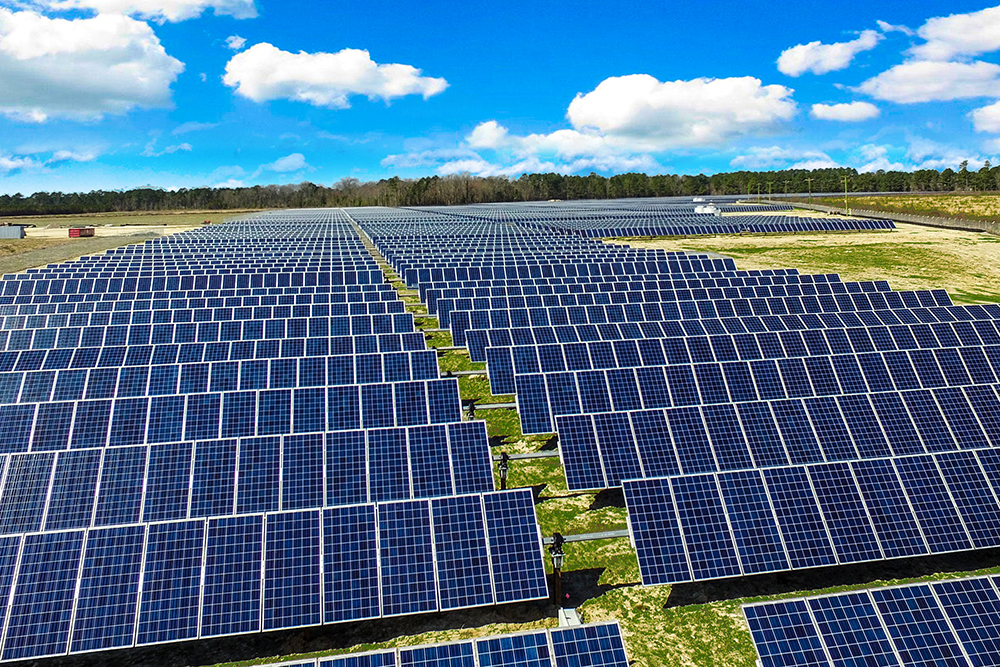
As the global demand for clean energy accelerates, utility-scale solar projects are becoming the backbone of modern power systems. Photovoltaic (PV) technology has advanced rapidly in recent years, but one critical aspect often overlooked is power transmission within and beyond solar farms. Efficient, reliable, and scalable transmission solutions are essential to unlocking the full potential of solar energy.
This article explores the evolving landscape of PV power transmission, key challenges, emerging technologies, and how companies like Junda Solar are contributing to this transformation.
Understanding PV Power Transmission in Utility-Scale Projects
In utility-scale solar installations, power transmission involves multiple stages:
- DC Generation – Solar panels generate direct current (DC).
- DC Collection – Power is aggregated through combiner boxes and cabling systems.
- Inversion to AC – Inverters convert DC to alternating current (AC).
- Step-Up Transformation – Voltage is increased for efficient long-distance transmission.
- Grid Integration – Electricity is transmitted to substations and fed into the grid.
Each stage presents unique engineering and efficiency challenges, especially as solar farms grow to hundreds or even thousands of megawatts.
Key Challenges in PV Power Transmission
1. Energy Losses
Transmission losses can significantly impact overall system efficiency. Losses occur due to:
- Resistance in cables
- Inefficient components
- Long transmission distances
Reducing these losses is crucial for maximizing return on investment (ROI) in utility-scale projects.
2. System Complexity
Large solar farms require extensive wiring, protection systems, and monitoring infrastructure. Managing these systems increases:
- Installation costs
- Maintenance requirements
- Risk of faults
3. Grid Stability and Integration
As solar penetration increases, grid operators face challenges such as:
- Voltage fluctuations
- Frequency instability
- Intermittency of solar generation
4. Safety and Protection
High-voltage DC systems require robust protection mechanisms, including disconnect switches and surge protection, to ensure operational safety.
Emerging Trends Shaping the Future
1. High-Voltage DC (HVDC) Systems
Traditionally, solar farms convert DC to AC before transmission. However, HVDC technology is gaining traction for long-distance power transmission due to:
- Lower energy losses
- Higher efficiency over long distances
- Better integration with renewable energy sources
Future solar farms may increasingly adopt DC-coupled architectures, minimizing conversion stages.
2. Smart Grid Integration
The integration of smart grid technologies enables:
- Real-time monitoring
- Automated fault detection
- Predictive maintenance
Advanced communication systems allow solar plants to dynamically respond to grid demands, improving stability and efficiency.
3. Modular and Scalable Designs
Modern utility-scale projects are shifting toward modular architectures, which offer:
- Easier expansion
- Simplified maintenance
- Reduced downtime
Prefabricated components, including disconnect systems and combiner boxes, play a critical role in this transition.
4. Advanced Power Electronics
Next-generation inverters and power electronics are improving:
- Conversion efficiency
- Grid compatibility
- Reactive power support
These technologies are essential for handling the increasing scale and complexity of solar farms.
5. Improved Protection and Isolation Systems
Safety remains a top priority in high-capacity PV systems. Advanced disconnect solutions ensure:
- Rapid isolation during faults
- Protection against overcurrent and surges
- Compliance with international safety standards
Working with a reliable solar disconnect box manufacturer in China ensures that these components meet both performance and regulatory requirements, especially for large-scale deployments.
The Role of Infrastructure Components
While solar panels often receive the most attention, supporting components are equally vital. These include:
- DC Combiner Boxes – Aggregate power from multiple strings
- Disconnect Boxes – Provide safe isolation for maintenance and emergencies
- Cabling Systems – Ensure efficient energy transfer
- Monitoring Devices – Enable real-time system insights
Companies like Junda Solar specialize in manufacturing high-quality solar electrical components that enhance system reliability and efficiency.
Digitalization and AI in Power Transmission
Artificial intelligence and data analytics are transforming PV transmission systems by enabling:
- Predictive Maintenance
Identifying potential failures before they occur - Performance Optimization
Adjusting system parameters for maximum efficiency - Fault Detection
Rapid identification and isolation of issues
These capabilities reduce downtime and operational costs while improving energy output.
Sustainability and Environmental Considerations
Future PV transmission systems are also being designed with sustainability in mind:
- Use of recyclable materials
- Reduction in land use through efficient layouts
- Minimization of electromagnetic impact
Efficient transmission directly contributes to reducing the carbon footprint of solar energy systems.
The Road Ahead
The future of PV power transmission in utility-scale solar projects is defined by:
- Higher efficiency through advanced technologies
- Greater integration with smart grids
- Enhanced safety and reliability
- Scalable and modular infrastructure
As solar energy continues to dominate the renewable sector, innovations in transmission will play a decisive role in determining how effectively this energy reaches end users.
Conclusion
Utility-scale solar projects are no longer just about generating electricity—they are about delivering it efficiently, safely, and reliably. Advances in PV power transmission are reshaping how solar energy is integrated into global power systems.
With industry players like Junda Solar focusing on high-quality components and forward-thinking solutions, the future of solar transmission looks promising. As technology evolves, the synergy between generation and transmission will be the key to unlocking the full potential of solar energy worldwide.