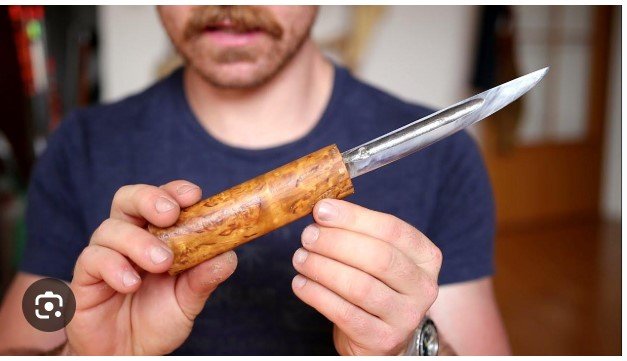
The Yakut knife is a product of necessity, shaped by the harsh climate of northeastern Siberia and the resourceful mindset of the Yakut (Sakha) people. Its construction reflects centuries of practical experience, where limited materials and extreme conditions demanded efficient, durable, and easily maintainable tools. Traditional Yakut knife-making combines carefully chosen materials with forging techniques that emphasize functionality over decoration.
Traditional Materials
Historically, iron was scarce in Yakutia, making it a valuable resource. Early Yakut blacksmiths relied on locally available iron, often obtained through trade or small-scale extraction. Because of this scarcity, blades were designed to use minimal metal while maintaining strength and usefulness.
Many traditional Yakut knives were made using low- to medium-carbon iron or steel. In some cases, blades combined different types of metal: a softer iron body for flexibility and shock absorption, with a harder steel edge forge-welded onto it. This method allowed the knife to hold a sharp edge without becoming brittle, an important feature in cold environments where metal can fracture more easily.
Knife handles were commonly made from birch burl, a material highly valued for its strength, light weight, and resistance to cracking. Birch burl also provided a warm, natural grip that remained comfortable in freezing temperatures. Other woods, such as larch or willow, were sometimes used, depending on availability.
Sheaths were traditionally made from wood and leather. A wooden core protected the blade, while a leather covering secured it to the belt. This design prevented the knife from freezing into the sheath and allowed quiet, smooth access.
Forging Techniques
Yakut knife forging was traditionally carried out by village blacksmiths, often working with simple tools and charcoal forges. The forging process began with heating the iron until it became malleable, then shaping the blade through careful hammering. Particular attention was paid to creating the knife’s distinctive asymmetrical blade.
The fuller, a defining feature of Yakut knives, was forged rather than ground whenever possible. By hammering the groove into the blade while hot, blacksmiths conserved material and increased structural strength. This technique also reduced the overall weight of the knife without compromising durability.
Hardening was performed selectively. Rather than hardening the entire blade, smiths often focused on the cutting edge. The blade was heated and quenched in water or oil, followed by tempering to reduce brittleness. This produced a knife that could withstand heavy use and be easily resharpened in the field.
Simplicity and Repairability
A key principle of Yakut knife construction was ease of maintenance. The asymmetrical grind allowed the blade to be sharpened quickly using simple stones, even in remote areas. If damaged, the knife could often be repaired or reforged rather than discarded.
This focus on repairability reflects the Yakut approach to tools as long-term companions rather than disposable items. A well-made knife could last a lifetime and be passed down through generations.
Cultural Significance of Craftsmanship
Forging a Yakut knife was not merely a technical process but a cultural practice. Blacksmiths held respected positions within their communities, and their work was trusted for its reliability and honesty. Decoration was minimal, as beauty was seen in balance, efficiency, and purpose.
Conclusion
Traditional Yakut knives for sale are a testament to intelligent material use and skilled forging techniques developed under challenging conditions. Through careful selection of iron, wood, and leather, combined with practical forging methods, Yakut blacksmiths created knives that were durable, efficient, and perfectly suited to their environment. These techniques continue to influence modern Yakut knife-making, preserving a craft deeply rooted in Siberian culture.