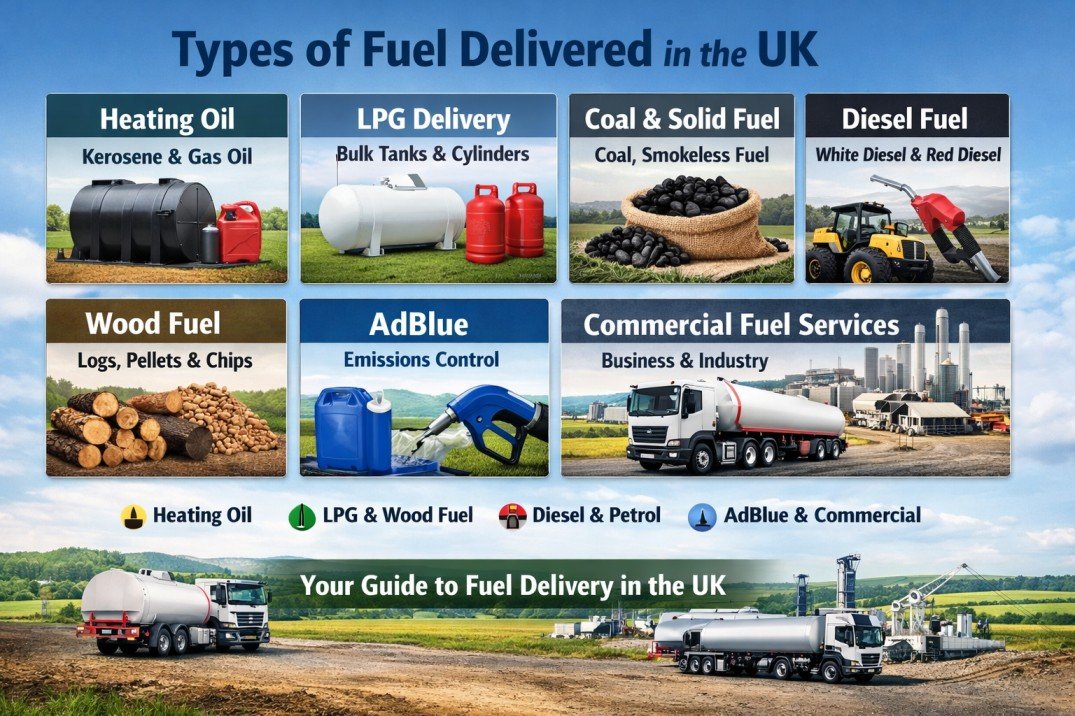
Fuel delivery services in the United Kingdom have evolved significantly over the years, offering convenience, reliability, and flexibility for both residential and commercial users. Whether you’re heating your home, running a farm, or managing a construction site, understanding the types of fuel delivered can help you choose the most efficient and cost-effective option.
This guide explores the various fuel types available for delivery across the UK, highlighting their uses, benefits, and key considerations.
1. Heating Oil Delivery (Kerosene & Gas Oil)
One of the most common fuel delivery services in rural and off-grid areas of the UK is heating oil delivery.
🔹 Kerosene (28-Second Oil)
- Widely used for domestic heating systems
- Clean-burning and efficient
- Ideal for homes with oil boilers
🔹 Gas Oil (Red Diesel for Heating)
- Used in older heating systems and some commercial settings
- More economical but less refined than kerosene
Why choose heating oil delivery?
- Reliable for off-grid properties
- Bulk delivery reduces cost per litre
- Easy storage in tanks
2. LPG (Liquefied Petroleum Gas) Delivery
For properties not connected to the mains gas network, LPG delivery is a popular alternative.
Key Features:
- Delivered in bulk tanks or cylinders
- Suitable for heating, cooking, and hot water
- Lower carbon emissions than oil
Ideal For:
- Rural homes
- Holiday parks
- Small businesses
LPG is known for its versatility and cleaner energy profile compared to traditional fuels.
3. Coal and Solid Fuel Delivery
Despite modern alternatives, coal and solid fuel delivery remains relevant in many UK households, especially those with traditional fireplaces or stoves.
Types of Solid Fuel:
- House coal
- Smokeless fuel (compliant with UK clean air regulations)
- Anthracite
- Briquettes
Benefits:
- Long-lasting heat
- Cost-effective in certain regions
- Suitable for multi-fuel stoves
Smokeless fuels are particularly important in smoke control areas across the UK.
4. Wood Fuel Delivery (Logs, Pellets & Chips)
Eco-conscious consumers are increasingly turning to wood fuel delivery.
🔹 Firewood Logs
- Kiln-dried or seasoned
- Used in log burners and fireplaces
🔹 Wood Pellets
- High-efficiency biomass boilers
- Consistent burn and low moisture
🔹 Wood Chips
- Used in large-scale heating systems
- Common in commercial or agricultural settings
Advantages:
- Renewable energy source
- Lower carbon footprint
- Readily available across the UK
5. Diesel Fuel Delivery (White Diesel & Red Diesel)
Fuel delivery services also cater to transportation and machinery needs.
🔹 White Diesel (DERV)
- Used in road vehicles
- Standard automotive fuel
🔹 Red Diesel (Gas Oil)
- For agricultural machinery, generators, and construction equipment
- Lower tax rate (restricted use)
Why It Matters:
- Ensures uninterrupted operations
- Bulk supply reduces downtime
- Essential for farms and industries
6. Petrol Delivery
Although less common for domestic users, petrol delivery is available for:
- Emergency fuel supply
- Commercial fleets
- Event management and remote operations
Safety regulations are strict, making professional delivery essential.
7. AdBlue Delivery
Modern diesel engines require AdBlue delivery to reduce emissions.
What is AdBlue?
- A fluid used in Selective Catalytic Reduction (SCR) systems
- Helps meet UK and EU emission standards
Common Users:
- Haulage companies
- Fleet operators
- Agricultural businesses
8. Commercial Fuel Delivery Services
Businesses across the UK rely on tailored fuel delivery solutions.
Services Include:
- Scheduled bulk deliveries
- Emergency fuel supply
- On-site fuel management
Industries Served:
- Construction
- Agriculture
- Logistics
- Manufacturing
These services ensure operational efficiency and cost control.
Choosing the Right Type of Fuel Delivered
When selecting the right fuel delivery service, consider:
- Property location (on-grid vs off-grid)
- Usage needs (heating, machinery, transport)
- Environmental impact
- Storage capacity
- Budget and fuel prices
A well-informed choice can significantly reduce energy costs and improve efficiency.
Future Trends in Fuel Delivery in the UK
The UK is moving toward greener energy solutions, and fuel delivery services are adapting:
- Increased demand for renewable fuels
- Growth in biofuels and biomass
- Smart tank monitoring and automated deliveries
- Focus on reducing carbon emissions
FAQs About Types of Fuel Delivered in the UK
1. What is the most common type of fuel delivered in rural UK homes?
Kerosene heating oil is the most commonly delivered fuel for off-grid homes in rural areas.
2. Is LPG better than heating oil?
LPG is cleaner and more environmentally friendly, but heating oil can be more cost-effective depending on usage and market prices.
3. Can I still use coal in the UK?
Yes, but many areas require the use of smokeless coal due to environmental regulations.
4. What is the difference between red diesel and white diesel?
Red diesel is taxed at a lower rate and is only for off-road use, while white diesel is for regular road vehicles.
5. How often should fuel be delivered?
It depends on usage, but most households schedule deliveries every few months or use automatic top-up services.
6. Are wood fuels a good alternative to traditional fuels?
Yes, wood fuels are renewable, eco-friendly, and increasingly popular for sustainable heating solutions.
7. Is fuel delivery safe?
Yes, when handled by certified suppliers following UK safety regulations.
8. Can businesses get customised fuel delivery plans?
Absolutely. Many suppliers offer tailored delivery schedules and bulk pricing for commercial clients.
Final Thoughts
Understanding the types of fuel delivered in the UK allows homeowners and businesses to make smarter, more efficient energy decisions. From traditional heating oil to modern eco-friendly wood fuels, each option offers unique benefits tailored to different needs.
As the UK continues its transition toward sustainable energy, fuel delivery services will remain a vital part of the energy landscape—adapting to meet both current demands and future environmental goals.