India is standing at the crossroads of an energy transformation, and green hydrogen is rapidly emerging as a cornerstone of the country’s clean energy ambitions. With strong government backing, increasing private sector participation, and a growing focus on decarbonization, the India green hydrogen market is poised for exponential growth over the next decade.
This shift is not just about energy it’s about sustainability, energy security, and positioning India as a global clean energy leader.
Understanding Green Hydrogen
Green hydrogen is produced using renewable energy sources such as solar and wind through a process called electrolysis, which splits water into hydrogen and oxygen without emitting carbon dioxide. Unlike grey or blue hydrogen, green hydrogen is carbon-free, making it a vital solution for hard-to-abate sectors like steel, cement, fertilizers, and heavy transport.
India’s Green Hydrogen Vision
The Indian government has made its intent clear through the National Green Hydrogen Mission, aiming to:
- Produce 5 million metric tonnes of green hydrogen annually by 2030
- Reduce fossil fuel imports
- Cut carbon emissions by nearly 50 million tonnes per year
- Create new economic and employment opportunities
India’s vast renewable energy capacity, especially in solar and wind, gives it a natural advantage in producing cost-competitive green hydrogen.
Key Drivers of the India Green Hydrogen Market
- Strong Policy Support
Government incentives, production-linked incentives (PLI), and favorable regulations are accelerating project development and investor confidence.
- Renewable Energy Abundance
India’s low-cost solar and wind power significantly reduces hydrogen production costs, making the market globally competitive.
- Industrial Decarbonization
Industries such as refineries, fertilizers, and steel are actively exploring green hydrogen to meet ESG goals and future carbon regulations.
- Export Potential
India has the potential to become a major exporter of green hydrogen and green ammonia, particularly to Europe and East Asia.
Market Challenges to Address
Despite strong momentum, the India green hydrogen market faces some challenges:
- High initial capital costs for electrolyzers
- Limited hydrogen storage and transport infrastructure
- Need for skilled workforce and technology scaling
However, continued R&D, international collaborations, and falling renewable energy costs are expected to mitigate these barriers.
Competitive Landscape
The market is witnessing active participation from:
- Large energy conglomerates
- Public sector enterprises
- Startups focused on electrolyzer manufacturing and hydrogen mobility
Strategic partnerships between Indian and global players are further strengthening the ecosystem.
Key Players
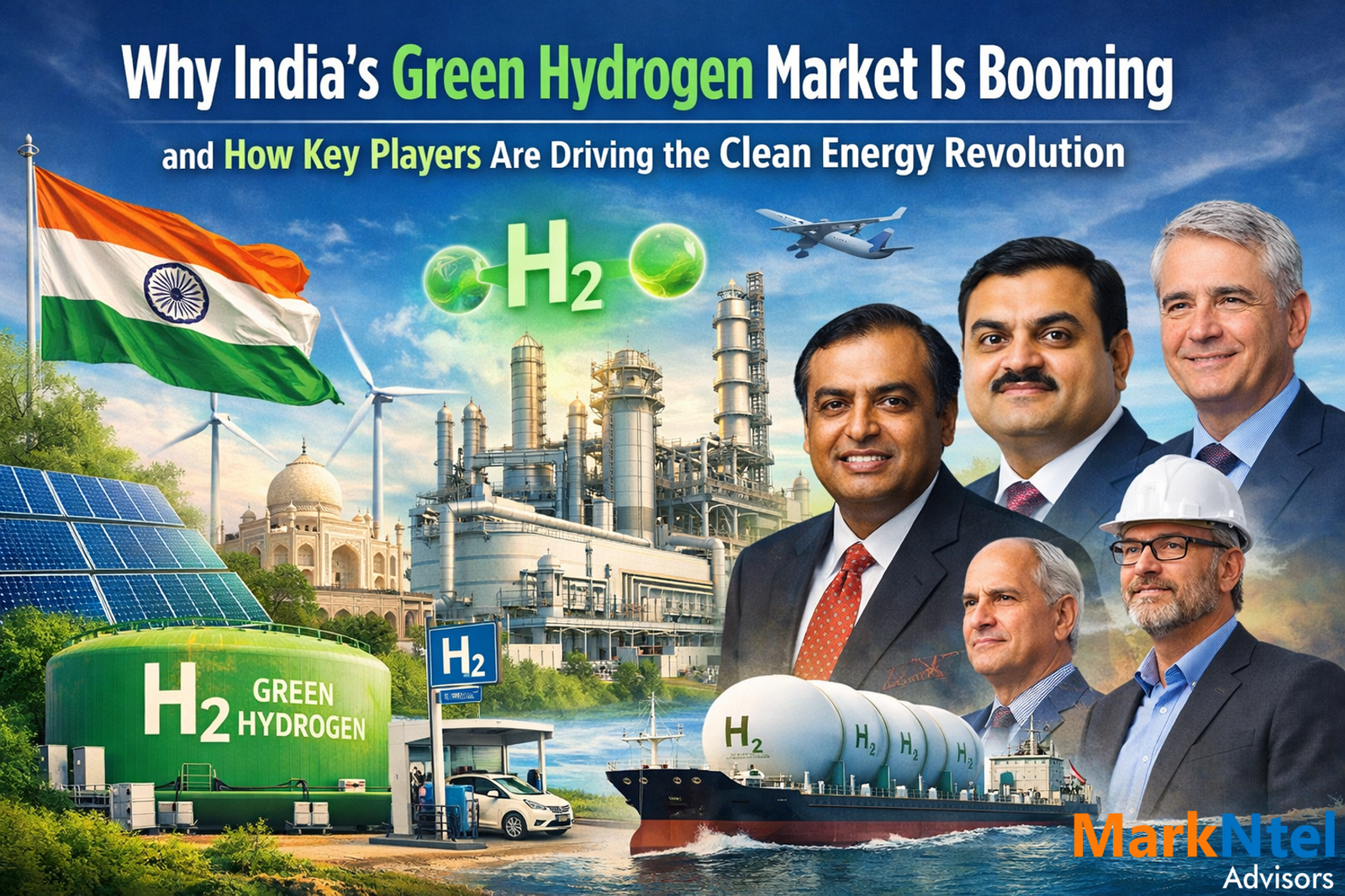
The India green hydrogen market features major global and domestic players driving technology and project development. Cummins India, HydrogenPro AS, MHI, Siemens, Stiesdal A/S, and Thyssenkrupp contribute advanced electrolyzer and hydrogen technologies, while Indian companies such as ACME Group, Azure Power, Adani Group, and Reliance Industries Ltd. are leading large-scale green hydrogen and green ammonia projects, strengthening India’s clean energy ecosystem.
Future Outlook
The future of the India green hydrogen market looks promising. As costs decline and infrastructure improves, green hydrogen will play a critical role in:
- Achieving India’s net-zero targets
- Transforming industrial energy consumption
- Supporting clean mobility and power storage
By 2030 and beyond, green hydrogen is expected to become a mainstream energy carrier rather than a niche solution.
Final Thoughts
India’s green hydrogen journey is more than an energy transition it’s an economic and environmental opportunity. With the right mix of policy, innovation, and investment, the India green hydrogen market can redefine the nation’s energy landscape and establish India as a global hub for clean hydrogen.
For businesses, investors, and policymakers, now is the time to engage with this rapidly evolving market.