
Few wildlife experiences on Earth compare to watching millions of animals move together across open plains, driven by instinct, survival, and the rhythm of the seasons. The Great Migration is not just a dramatic wildlife event—it is a living system in motion. For travelers who venture into East Africa to witness it firsthand, the experience is raw, unpredictable, and deeply humbling.
This article explores what the migration truly looks like on the ground, how it unfolds throughout the year, and what visitors can realistically expect when embarking on this unforgettable journey.
Understanding the Great Migration
The Great Migration is an annual, circular movement of over two million wildebeest, zebras, and gazelles across the Serengeti–Mara ecosystem of Tanzania and Kenya. Unlike migrations with fixed start and end points, this one is continuous. The herds move in response to rainfall, following fresh grass and water sources.
Predators such as lions, cheetahs, leopards, and crocodiles follow closely behind, making the migration one of the most intense wildlife dramas on the planet. Every stage of the journey—from calving to river crossings—plays a critical role in maintaining the balance of this ecosystem.
What “Nature in Motion” Really Means
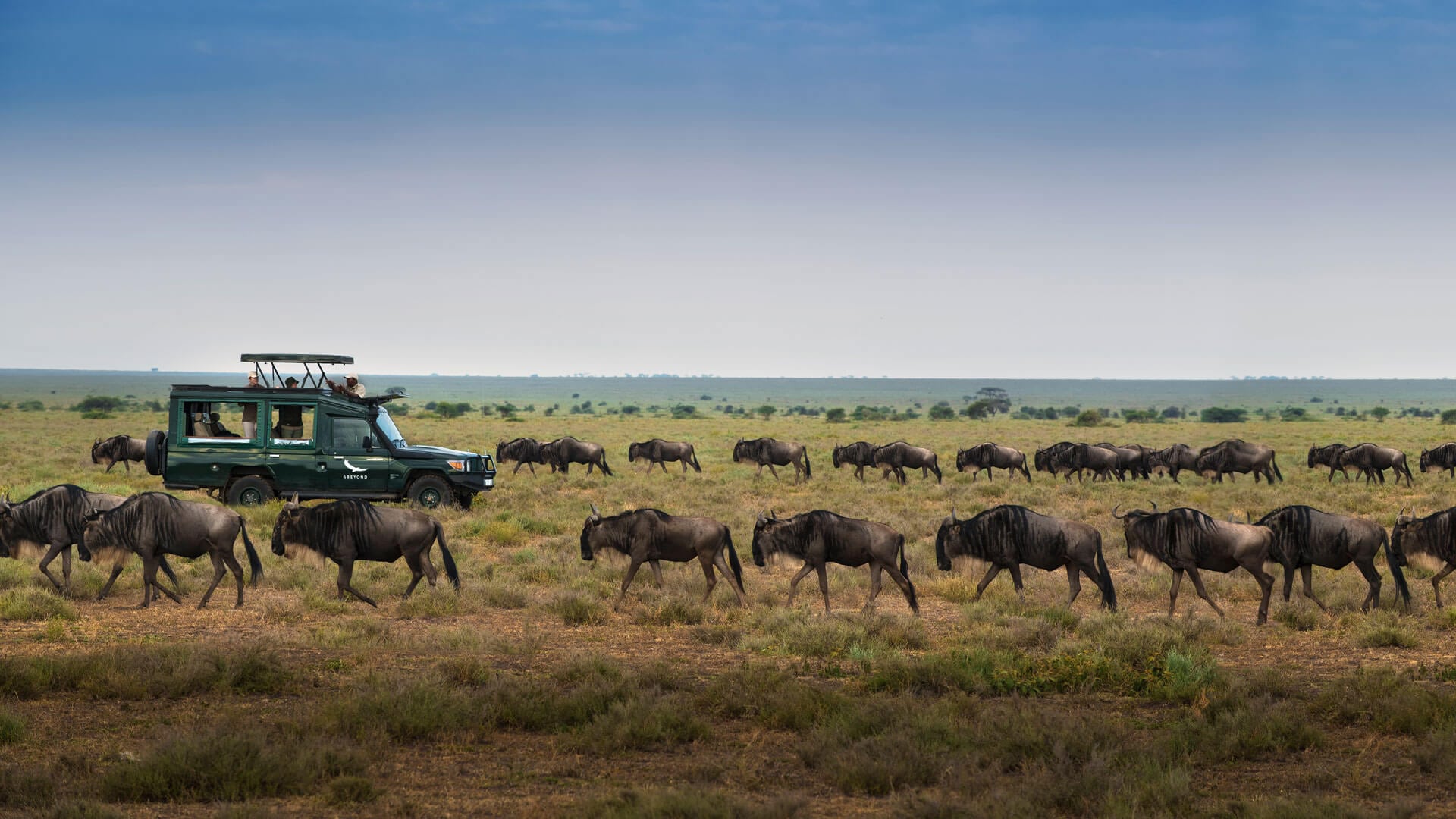
From documentaries, many people imagine the migration as a single massive river crossing or a nonstop stampede. In reality, it is more subtle and complex. Some days you may see endless columns of animals stretching to the horizon. On others, the movement is slow and deliberate, with herds grazing peacefully before suddenly surging forward.
A great migration safari is less about chasing dramatic moments and more about observing patterns—how animals respond to weather, predators, and terrain. This unpredictability is what makes the experience authentic. No two safaris are ever the same.
The Migration Through the Seasons
Calving Season (January to March)
The migration begins the year in the southern Serengeti, where short grasses provide ideal conditions for calving. During this period, hundreds of thousands of wildebeest calves are born within a few weeks. This abundance of newborns attracts predators, leading to frequent and intense wildlife interactions.
For visitors, this season offers incredible opportunities to witness early life, predator hunts, and large concentrations of animals in open landscapes.
The Journey North (April to June)
As the rains fade, the herds begin moving northwest through central and western Serengeti. The movement is gradual but relentless. River crossings start to occur, particularly along the Grumeti River, where crocodiles pose a major threat.
This phase highlights endurance and survival, as animals face exhaustion, hunger, and danger while continuing their journey.
River Crossings and the Mara (July to October)
This is the most famous phase of the migration, when herds cross the Mara River into Kenya. These crossings are chaotic, dramatic, and often deadly. Animals hesitate for hours before plunging into fast-moving waters filled with crocodiles.
A great migration safari during this period offers the chance to witness one of nature’s most powerful spectacles—but patience is essential. Crossings happen on the animals’ schedule, not the visitor’s.
The Return South (November to December)
As short rains begin in the south, the herds slowly make their way back into the Serengeti. The cycle resets, preparing for another calving season and continuing one of Earth’s oldest wildlife journeys.
The Emotional Impact on Visitors

Seeing the migration in person often leaves travelers speechless. The scale alone is overwhelming, but it is the emotion behind the movement—the struggle, resilience, and instinct—that resonates most deeply.
Visitors quickly realize that this is not a staged wildlife experience. Animals are not performing for cameras. They are simply surviving. Watching a mother guide her calf through danger or a herd hesitate at a riverbank offers a profound connection to the natural world.
Setting Realistic Expectations
While the migration is extraordinary, it is important to approach it with realistic expectations. Wildlife sightings depend on timing, weather, and location. Some days are quiet, others explosive with action.
A well-planned great migration safari focuses on immersion rather than guarantees. Skilled guides, flexible itineraries, and patience all play key roles in shaping a rewarding experience.
Why the Migration Still Matters
Beyond tourism, the Great Migration is vital to East Africa’s ecosystems. The movement of millions of animals fertilizes grasslands, supports predator populations, and sustains biodiversity across borders.
By experiencing the migration responsibly, visitors also contribute to conservation efforts that protect habitats, wildlife corridors, and local communities who coexist with this natural phenomenon.
Final Thoughts
Witnessing the Great Migration is not about checking off a bucket-list moment—it is about understanding nature as a living, moving force. It is chaotic, beautiful, and often unforgiving. A great migration safari offers a rare chance to see the planet as it once was, governed by natural rhythms rather than human schedules.
